The History and Significance of San Pedro y San Pablo Explained
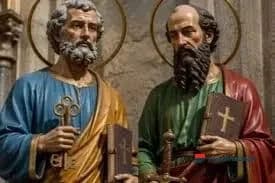
June 29 marks the solemnity of San Pedro y San Pablo, a significant Catholic feast honoring the two foundational apostles who were martyred in Rome. The day is also observed as the Day of the Pope, emphasizing unity, faith, and the historical expansion of the Christian church.
KEY TAKEAWAYS
1 MIN READ- The solemnity of San Pedro y San Pablo on June 29 commemorates the martyrdom of two foundational apostles.
- San Pedro, the first Pope, was crucified head down, while San Pablo was beheaded as a Roman citizen.
- The date is also celebrated as the Day of the Pope, focusing on prayers for the current leader of the Church.
- Celebrations take place worldwide, with major events held in Rome and local parishes, such as in San Telmo, Buenos Aires.
Every year on June 29, the Catholic Church observes a major solemnity dedicated to San Pedro y San Pablo, widely regarded as two of the most influential figures in Christian history. This liturgical celebration honors their commitment to the faith and their ultimate sacrifice in Rome, marking a tradition that has spanned nearly two millennia.
The Significance of San Pedro y San Pablo
Historical accounts suggest that San Pedro and San Pablo were martyred around the year 67 A.D. during the persecutions initiated by Emperor Nero. Despite their vastly different backgrounds, they are venerated together for their collective impact on the expansion of the early Church. San Pedro, a fisherman from Galilee, is recognized as the first Pope and a fundamental symbol of unity within the faith. According to biblical tradition, he requested to be crucified head down, feeling unworthy to die in the same manner as Jesus Christ.
In contrast, San Pablo, originally a persecutor of Christians named Saul of Tarsus, underwent a profound conversion on the road to Damascus. He subsequently became known as the Apostle of the Gentiles, playing a critical role in spreading the Christian message beyond Jewish communities. Because he held Roman citizenship, he was executed by beheading. The joint feast of San Pedro y San Pablo serves as a reminder of their shared mission to establish and strengthen the foundations of the Church.
Global Observance and Devotion
The celebration of San Pedro y San Pablo is deeply rooted in global tradition, particularly in Rome, where the Pope presides over liturgical ceremonies at the Basilica of Saint Peter. Beyond the liturgical aspects, the day is also observed as the Day of the Pope, a time for the faithful to offer prayers for the current Summon Pontiff, who is considered the direct successor of San Pedro.
In various regions, including Buenos Aires, local churches such as the Parroquia San Pedro Apóstol in San Telmo commemorate the day with special masses and processions. Devotees often use this occasion to seek intercession for strength, wisdom, and fidelity to their religious convictions. The solemnity remains a cornerstone of the church calendar, emphasizing the importance of doctrinal unity and missionary zeal in the modern era.