The Contested Humanitarian Legacy of Edmund Dene Morel and the Congo Scandal
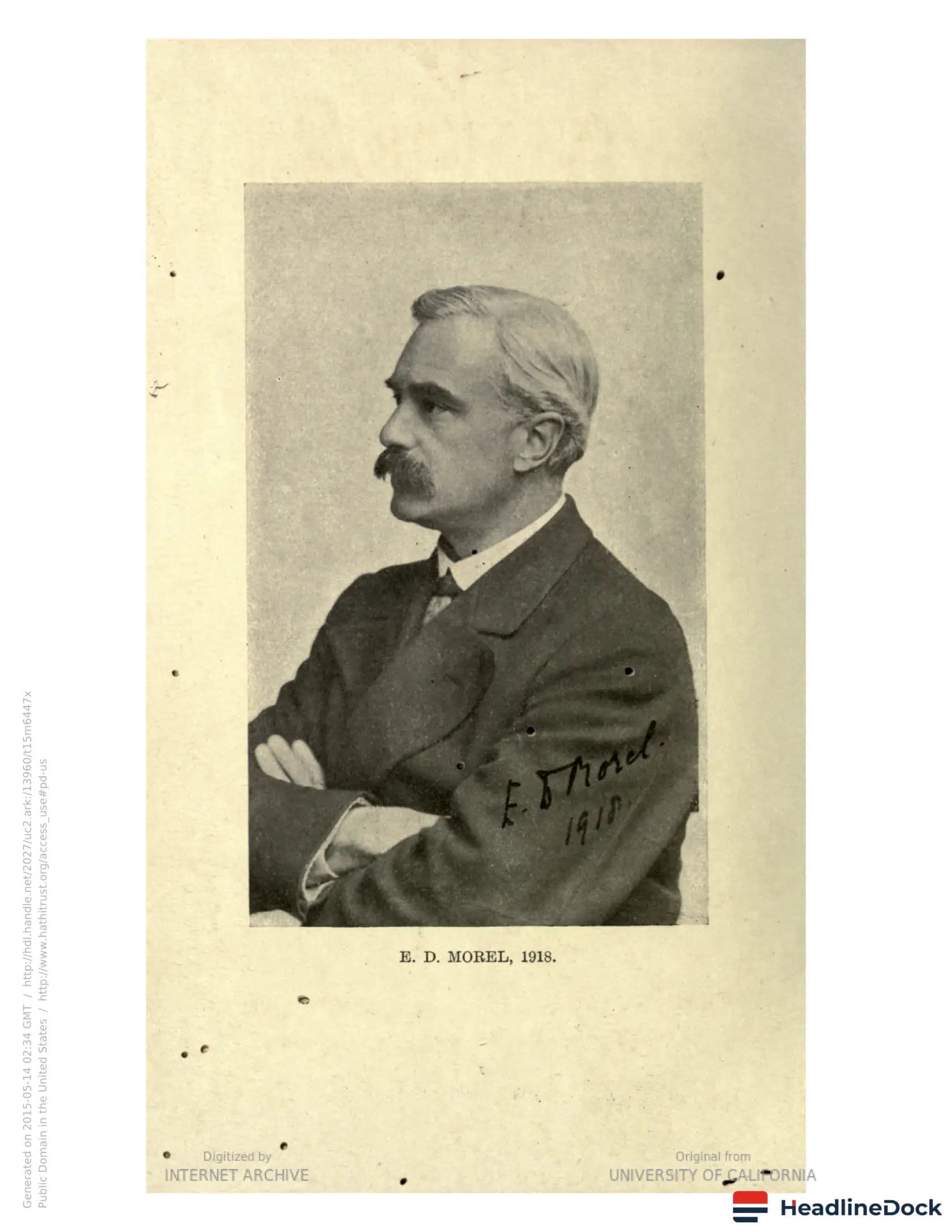
Edmund Dene Morel is remembered for exposing the brutal atrocities committed in King Leopold II’s Congo Free State. However, his legacy is complicated by his strategic decision to defend allies implicated in similar human rights abuses elsewhere, highlighting the complexities of humanitarian activism.
Highlights
- •Edmund Dene Morel exposed the extreme violence of King Leopold II’s Congo Free State.
- •Morel’s efforts helped transform missionary reports into a major international humanitarian scandal.
- •His legacy is complicated by his defense of allies involved in coercive labor systems.
- •Morel later served as a Labour MP, notably defeating Winston Churchill in a 1922 election.
The humanitarian activism legacy of Edmund Dene Morel remains a subject of intense debate, highlighting the complex intersection of moral crusading and strategic compromise. As a young clerk for the Elder Dempster shipping firm, Morel identified significant statistical anomalies in trade between Belgium and the Congo. His investigation ultimately exposed the brutal systems of violence implemented within the Congo Free State, which was held as a private possession by King Leopold II of Belgium.
During the 23-year reign of Leopold II, millions of Congolese people perished under a system defined by state-sponsored torture, widespread murder, and systematic forced labor. These atrocities were fundamentally driven by the relentless extraction of ivory and rubber. Morel emerged as the most significant figure in campaigning against this regime, effectively turning scattered accounts from missionaries into a major international scandal.
The Complex Humanitarian Legacy of Edmund Dene Morel
Following his discovery of the systemic exploitation, Morel established the British Congo Reform Association (CRA) in 1904. He worked alongside key figures like the Anglo-Irish diplomat Roger Casement. Despite his dedication to ending the horrific conditions in the Congo, Morel maintained a noticeably different approach when confronting abuses linked to his own financial backers and political allies.
The Congo Reform Association relied heavily on funding from prominent individuals, including the British cocoa manufacturer William Cadbury. At the time, Cadbury Brothers faced significant public criticism for sourcing cocoa from plantations in São Tomé and Príncipe, where workers were subjected to conditions described by many as a form of slavery. While others called for a boycott, Morel consistently defended Cadbury, arguing for a more cautious, incremental approach to reform. This strategic choice underscored the complicated reality of humanitarian activism during that era, where the urgency of one moral cause often led to the downplaying of abuses elsewhere to maintain necessary political and financial support.
After his campaign regarding the Congo concluded, Morel remained deeply engaged in politics. He gained notoriety as a critic of British foreign policy during World War I, leading to his imprisonment in 1917. Later, he joined the Labour Party and achieved a notable electoral victory in 1922, defeating Winston Churchill to become the Member of Parliament for Dundee. He passed away in 1924 at the age of 51. Today, Morel is celebrated for his pioneering investigative techniques and his role in mobilizing global opinion, though his career serves as a lasting reminder that even significant figures in the history of human rights often operated within a framework of moral compromise.