Supreme Court Ruling Puts Delhi’s Pedestrian Infrastructure Under The Spotlight
Following a landmark Supreme Court ruling declaring the right to walk a fundamental constitutional guarantee, Delhi’s inadequate pedestrian infrastructure is under scrutiny. With high encroachment rates and increasing road fatalities, the judgment mandates a prioritized focus on safe, unobstructed walking spaces for citizens.
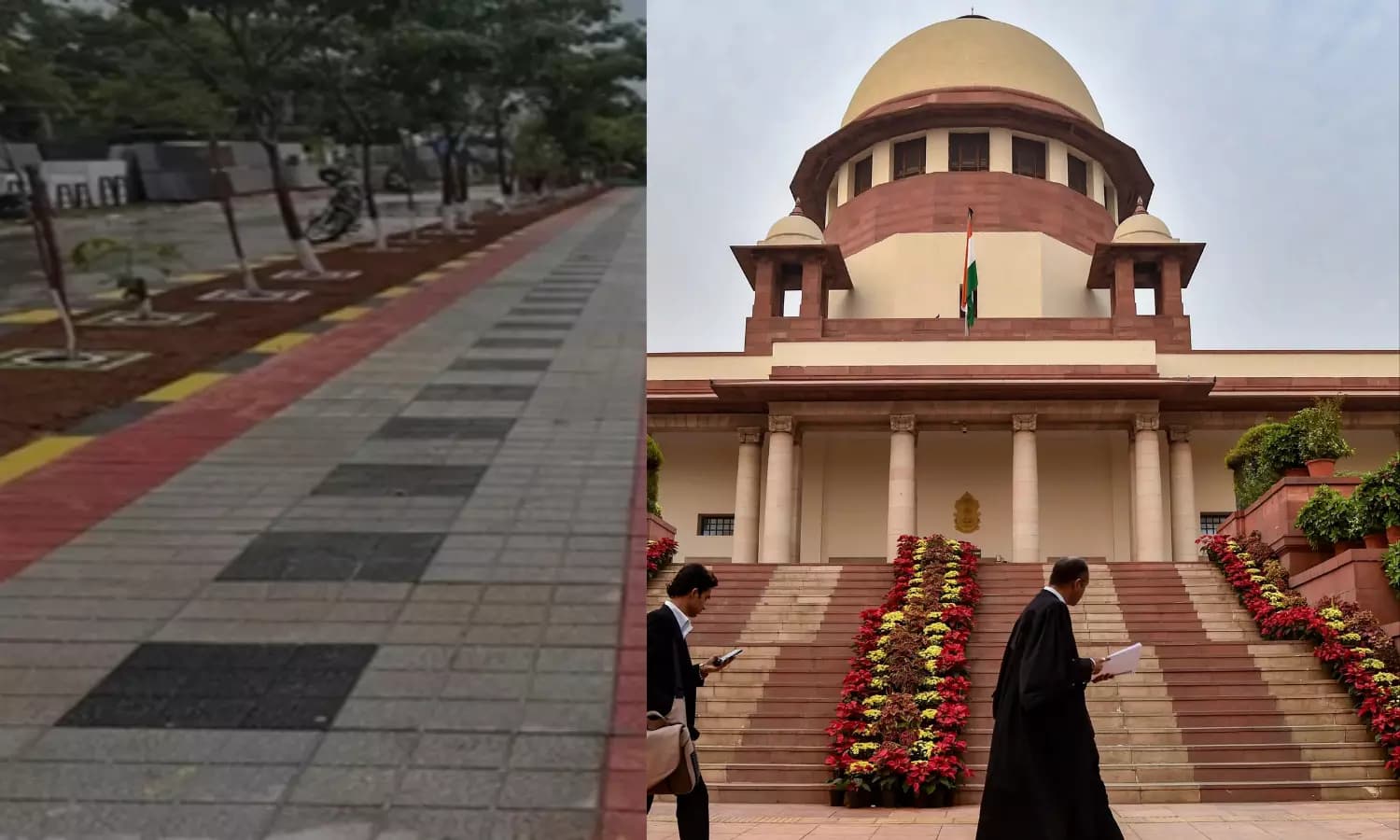
Highlights
- •Supreme Court declares the right to walk on footpaths a fundamental right under the Constitution.
- •Delhi's pedestrian infrastructure is heavily compromised by illegal parking and widespread encroachment.
- •Official data shows over 430,000 challans for obstructive parking in early 2026 alone.
- •Research indicates 44% of Delhi roads lack footpaths, contributing to hundreds of annual pedestrian fatalities.
The Supreme Court of India has issued a significant ruling that brings pedestrian infrastructure in Delhi under intense scrutiny. In a recent motor accident compensation case involving the tragic death of a five-year-old child, a bench led by Justices P S Narasimha and A S Chandurkar declared that the right to walk on designated footpaths is a fundamental right. This ruling asserts that these spaces, protected under Article 19(1)(d) and the Right to Life guaranteed by Article 21 of the Constitution, must take priority over motorized traffic.
Constitutional Mandate and Urban Reality
The landmark judgment emphasizes that pedestrians maintain the primary claim to footpaths, a reality that stands in stark contrast to the current urban environment in the capital. Frequently, these areas are either missing, damaged, or occupied by illegal parking and encroaching structures. Legal experts suggest that this judicial intervention serves as a necessary reminder of the state’s constitutional duty to ensure safe mobility for all citizens, potentially accelerating efforts to clear encroachments.
The situation remains particularly acute within areas governed by the Municipal Corporation of Delhi (MCD) and the New Delhi Municipal Council (NDMC). Reports indicate that many footpaths have effectively been transformed into private or authorized parking zones, leaving pedestrians with little to no space to navigate safely. Official Delhi Traffic Police data highlights the scale of the issue, showing over 430,000 challans issued for obstructive parking between January and March of this year alone.
The Hidden Dangers for Pedestrians
Research conducted by the Transportation Research and Injury Prevention Centre at IIT Delhi, in partnership with University College London, confirms these daily hardships. Their 2022 study revealed that nearly 44 per cent of roads in the capital lack proper footpaths. Furthermore, pedestrians frequently perceive existing infrastructure as unsafe due to factors such as poor lighting, lack of formal crossings near transit hubs, and obstruction by vehicles.
The study also highlighted the challenges faced by so-called captive pedestrians—individuals who must walk out of necessity rather than choice, often lacking access to private or public transport. These individuals face heightened risks from road accidents, pollution, and the hostile built environment. With official figures indicating that 649 pedestrians lost their lives in Delhi in 2025, and pedestrians accounting for 43 per cent of total fatal road crashes in 2022, the need for improved pedestrian safety and infrastructure compliance has never been more urgent.