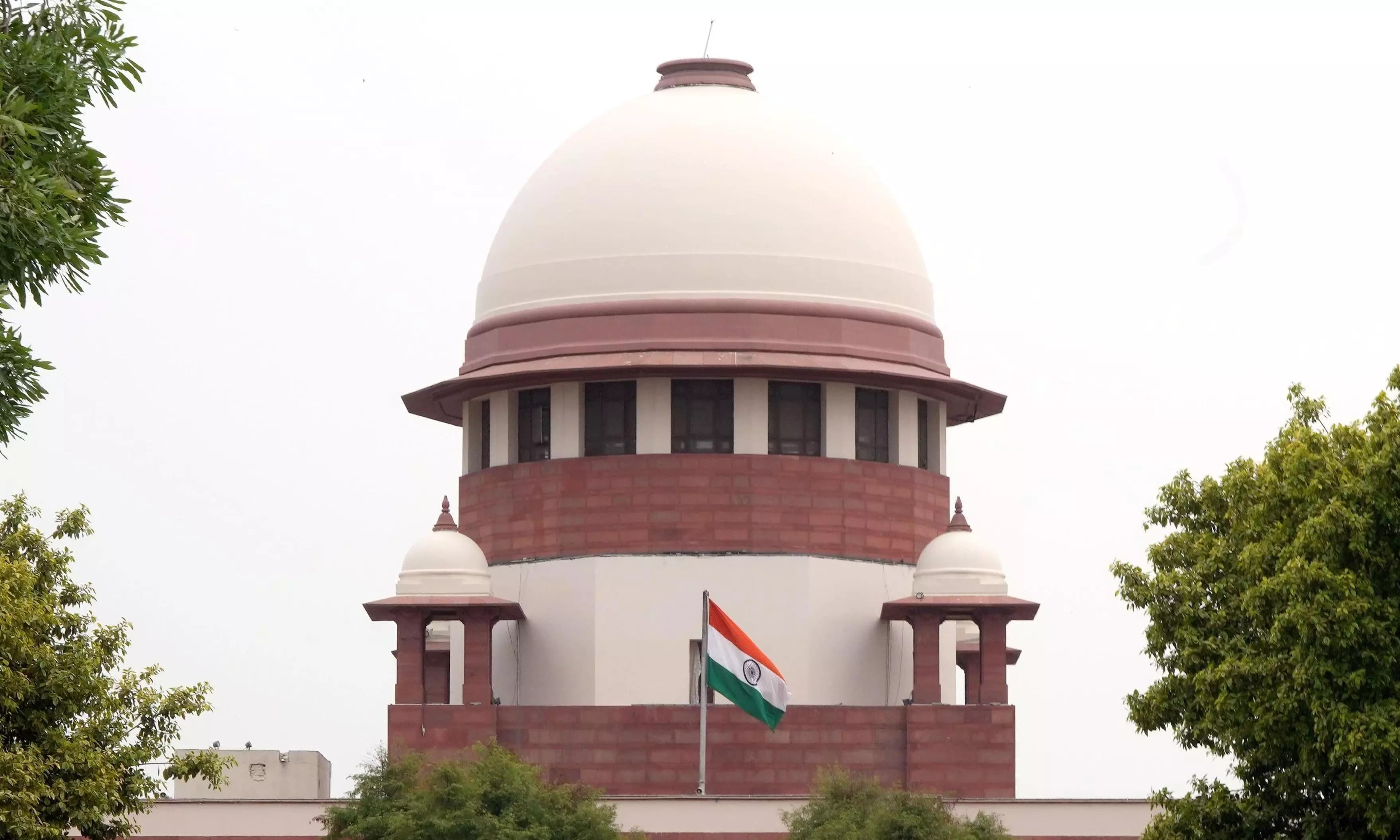
Supreme Court Refuses to Interfere with Collegium Process for High Court Judges
The Supreme Court has refused to interfere with the collegium process for High Court judge appointments. Justices B.V. Nagarathna and Joymalya Bagchi stated that judicial recommendations are based on subjective satisfaction, leading the petitioner to withdraw their plea for alternative remedies.

Highlights
- •The Supreme Court declined to interfere with the collegium process for High Court judge appointments.
- •The bench emphasized that recommendations rely on the subjective satisfaction of the collegium.
- •The court noted that seniority is not the sole factor for judicial elevation.
- •The petitioner withdrew the plea with liberty to pursue other administrative or judicial remedies.
The Supreme Court of India has formally declined to intervene in the collegium process regarding the selection and appointment of judges to High Courts. This significant decision follows a legal challenge initiated by a judicial officer from Himachal Pradesh, who sought to contest the established procedure for elevations.
During the hearing, the bench comprised of Justice B.V. Nagarathna and Justice Joymalya Bagchi emphasized the court's reluctance to oversee such administrative functions. The justices warned that meddling with the collegium's internal proceedings would essentially be opening a Pandora’s box, which the judiciary aims to avoid. This stance reinforces the long-standing principle that judicial appointments rely heavily on the subjective satisfaction and internal deliberations of the collegium system, rather than being subject to direct judicial oversight.
Understanding the Limitations of Judicial Intervention
The petitioner had raised concerns regarding the promotion process, alleging that junior officers were prioritized for elevation to the Himachal Pradesh High Court over more senior candidates. In response, the bench clarified that seniority is not the sole criterion for elevation. Furthermore, the court questioned whether it could properly direct the collegium on the judicial side to consider specific names or alter its decision-making process, ultimately concluding that such actions are beyond its scope.
The Supreme Court noted that there was no definitive evidence to suggest the petitioner's candidacy had been outright rejected. The bench suggested that the officer’s name might still be under active consideration or could have been deferred as part of the standard administrative review. It was further highlighted that because the recommendations of the High Court collegium had already received approval from the Supreme Court collegium, the petitioner was advised to pursue alternative remedies through the appropriate administrative or judicial channels available within the High Court structure.
Following these clear observations from the bench, the petitioner opted to withdraw the plea, receiving the court's permission to explore other suitable legal avenues. Consequently, the case was disposed of by the apex court. The backdrop for this matter includes the recent approval by the Supreme Court collegium on June 2, 2026, which greenlit the appointment of judicial officers Chirag Bhanu Singh, Bhupesh Sharma, and Yogesh Jaswal to the Himachal Pradesh High Court.