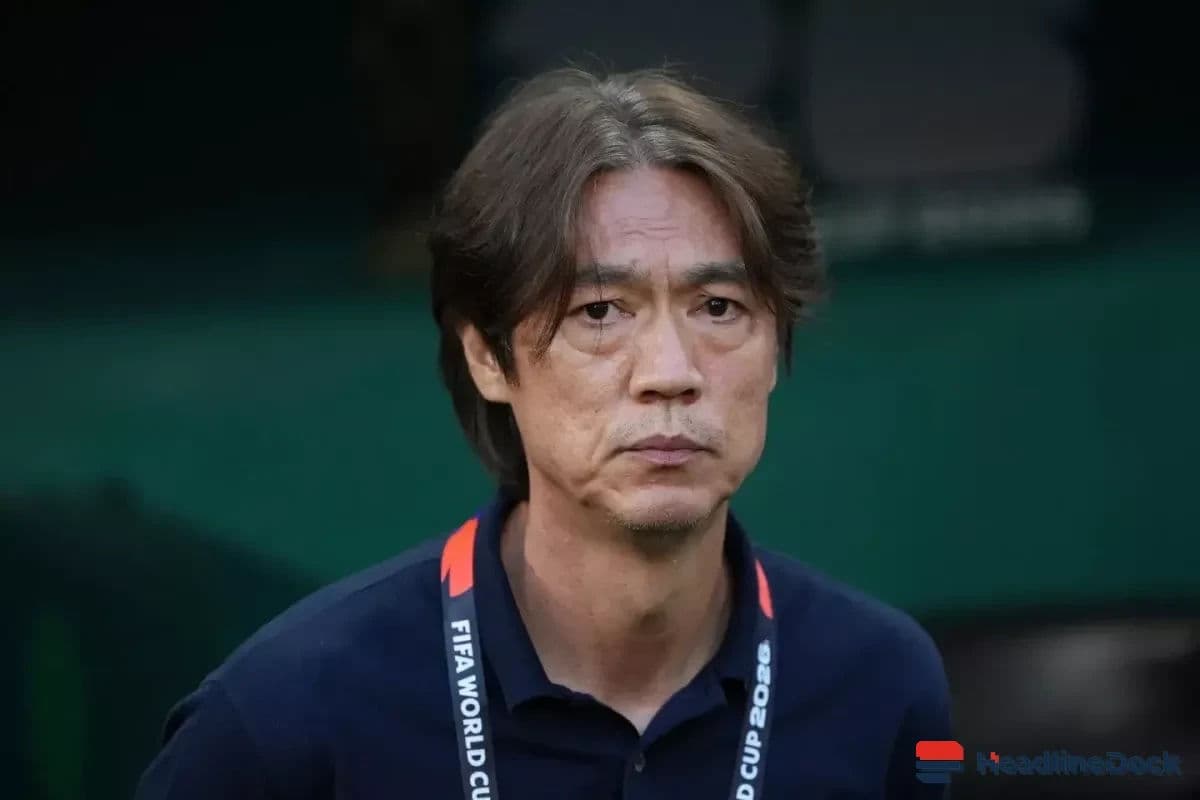
South Korea Football Coach Hong Myung-bo Resigns After World Cup Exit Failure
South Korea’s head coach, Hong Myung-bo, has resigned following a disappointing 2026 World Cup exit. The move has triggered a wider investigation into the nation's football governance and the Korea Football Association, with fans and officials demanding structural reform to restore the team's competitive standing.

KEY TAKEAWAYS
1 MIN READ- Head coach Hong Myung-bo resigned following South Korea's early 2026 World Cup exit.
- Public and official scrutiny has intensified regarding KFA governance and hiring practices.
- The team's performance, including benching Son Heung-min, drew sharp criticism from fans and experts.
- KFA President Chung Mong-gyu plans to step down amid ongoing administrative controversies.
South Korean football finds itself at a critical juncture after the national team’s premature exit from the 2026 World Cup. Following the elimination, head coach Hong Myung-bo officially resigned from his position, expressing deep regret to fans and the nation. The departure comes amidst growing scrutiny regarding the team's leadership and the overall management of the sport in the country.
The campaign, which ended in disappointment, saw the team struggle through the group stages. Despite a promising start against the Czech Republic, the squad later suffered significant setbacks, including a crucial loss to Mexico. The decision to bench star captain Son Heung-min during a pivotal match drew intense criticism, with observers describing the performance as one of the poorest in the nation's football history. The mounting pressure even led to reports of threats against the staff, prompting security concerns.
Leadership Crisis and Governance Concerns
The turmoil extends beyond the performance of the coach. Public frustration has reached a boiling point, with national leaders and fans alike questioning the structural integrity of the Korea Football Association (KFA). Critics argue that the current leadership, particularly under president Chung Mong-gyu, has prioritized cronyism over competence. The selection process for the head coach in July 2024 has been a primary target of these complaints, fueling demands for greater transparency.
Government investigations into the KFA have only added to the administrative instability. While Chung Mong-gyu, who has served as the president since 2013, has announced plans to step down, his tenure remains a point of contention. The organization now faces the difficult task of restructuring its approach to match the long-term success seen by regional rivals like Japan, which has consistently outperformed its neighbors on the global stage through a more structured and visionary football development model.
As the nation looks toward the future, there is a clear consensus that the current crisis must serve as a turning point. With a vacancy at the head coach position and significant changes expected in the federation’s hierarchy, there is an urgent need to modernize the professional infrastructure. The goal is to restore the status of the Taeguk Warriors as a dominant force in Asian football by fostering a more unified and professional environment for players and staff.