Sinaloa Cartel Leader El Mayo Zambada Accepts Life Sentence in U.S. Court

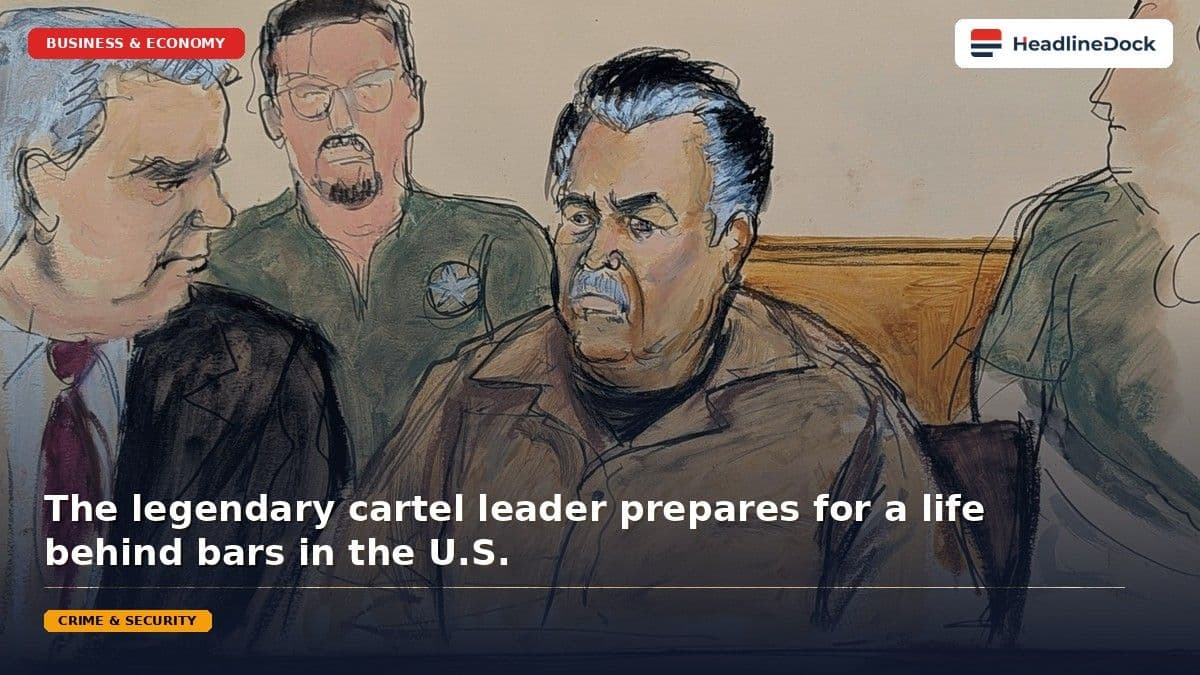
Sinaloa Cartel leader Ismael 'El Mayo' Zambada has accepted a life sentence in the United States. His defense team is seeking placement in a medically equipped federal prison, highlighting a cooperative approach compared to the lengthy trial of his former partner, El Chapo.
KEY TAKEAWAYS
1 MIN READ- Ismael 'El Mayo' Zambada has formally accepted a life sentence for his leadership role in the Sinaloa Cartel.
- Defense attorneys are requesting that the judge assign him to a prison with specialized medical facilities due to his age and health.
- Zambada’s decision to plead guilty early is being contrasted with the lengthy and costly trial of his former associate, Joaquín 'El Chapo' Guzmán.
- The sentencing hearing is expected to take place on July 20, following years of criminal activities and recent internal cartel violence.
The notorious leader of the Sinaloa Cartel, Ismael 'El Mayo' Zambada, has officially accepted a cadena perpetua (life sentence) in the United States. In a formal submission to the court, the 76-year-old drug lord acknowledged that he will spend the remainder of his life behind bars, a move designed to conclude his criminal proceedings without the necessity of a complex and lengthy jury trial.
This decision, confirmed in a letter from his legal representative Frank A. Perez, comes just weeks before his scheduled sentencing hearing. Zambada has been in U.S. custody since late July 2024, following his arrival in the country under highly unusual circumstances involving the son of his former associate, Joaquín 'El Chapo' Guzmán.
Medical Needs and Legal Distinctions
While accepting the inevitability of a life sentence, the defense has filed a specific request regarding the conditions of Zambada’s incarceration. Due to his advanced age and documented health issues, his lawyers are urging the judge to recommend that he be housed in a federal facility equipped with specialized medical care. They have highlighted facilities such as FMC Butner, FMC Rochester, or MCFP Springfield as appropriate environments that can address his ongoing health needs.
The defense team has taken care to differentiate Zambada’s approach from that of 'El Chapo' Guzmán, who famously fought his case through an eleven-week jury trial. By pleading guilty early and expressing remorse for his actions, Zambada intends to signal his cooperation with the judicial process. His lawyers argue that this cooperative stance has saved the U.S. judicial system significant time, logistical strain, and millions of dollars in security costs that were associated with his predecessor's trial.
The transition of power and subsequent infighting within the Sinaloa Cartel, particularly between the factions known as Los Chapitos and Los Mayos, has resulted in a period of intense instability in Culiacán. While the legal proceedings against Zambada are nearing a conclusion, the broader impact of his capture continues to be felt throughout the region. The court is now tasked with reviewing these requests regarding his medical placement as it prepares for the final sentencing date on July 20.