Mysuru Completes First Scientific Tree Count Across 65 Wards Documenting 1.2 Lakh Trees
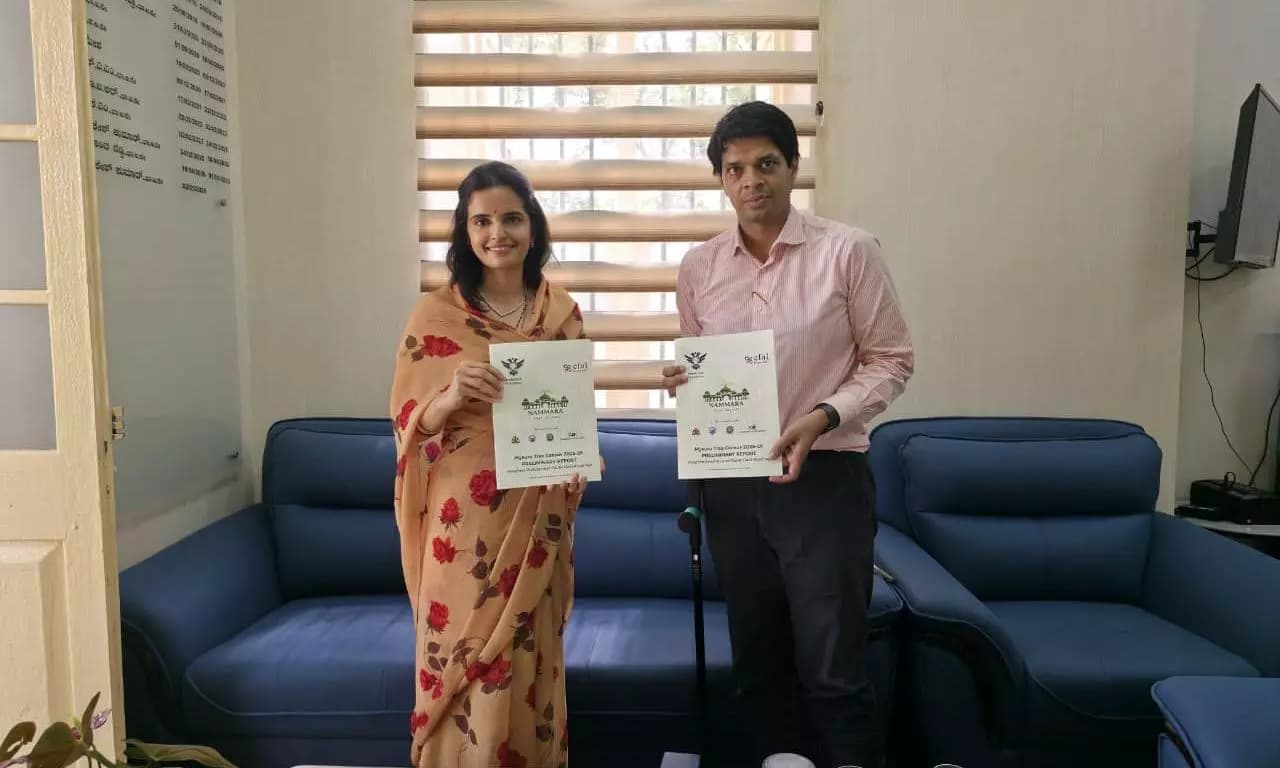
The Mysuru City Corporation has completed its first scientific tree count, documenting 1,21,789 trees across 65 wards. Led by the Bherunda Foundation, this initiative aims to create a sustainable environmental framework and guide future urban planning through detailed data and geo-tagging.
Highlights
- •The Nammara project successfully counted 1,21,789 trees across 65 wards in Mysuru.
- •This is the first scientific census to geo-tag and permanently record urban trees in the city.
- •The initiative, led by the Bherunda Foundation, involved collaboration between the government, NGOs, and citizens.
- •A detailed report on species density, heritage trees, and canopy cover is expected in August 2026.
In a groundbreaking environmental initiative, a comprehensive scientific tree count has been successfully conducted across all 65 wards of the Mysuru City Corporation. The massive survey, which aimed to create a precise digital map of the city’s urban forestry, has officially documented 1,21,789 trees located along roads, public parks, institutional campuses, and religious sites.
Known as the “Nammara” project (Ours Tree), the census is the first of its kind to systematically count, geo-tag, and create a permanent record of individual trees throughout the city. The initiative was spearheaded by Trishika Kumari Wadiyar, who led the project through the Bherunda Foundation. The project serves as a cornerstone for future urban planning, with the ultimate goal of fostering sustainable development, building continuous green networks, and reducing urban heat islands while enhancing air quality.
Data-Driven Environmental Planning
The monumental scientific tree count began in October 2025 and concluded in April 2026. Preliminary findings have already been submitted to Deputy Commissioner Lakshmikanth Reddy. The project represents a significant collaborative effort, involving the local district administration, the Mysuru City Corporation, academic institutions, private businesses, and hundreds of dedicated citizen volunteers. It originally took root through the efforts of the Mysuru Grahakara Parishat, an NGO that brought in technical expertise to ensure the accuracy of the data.
While the initial count has been finalized, experts are currently engaged in a rigorous verification process. This deeper analysis will provide a comprehensive breakdown of tree species, ward-specific population density, canopy coverage, and carbon sequestration capabilities. Additionally, the study aims to identify and catalog heritage trees that have stood for over 100 years. The final, detailed report is scheduled to be released in August 2026, offering crucial insights including the top-20 species distribution maps and a clear distinction between native and exotic flora.
Reflecting on the success of the initiative, Trishika Kumari Wadiyar noted that the survey is far more than a simple census; it represents a long-term investment in the environmental health of the city. By establishing a robust foundation for informed urban development, the project ensures that Mysuru can protect its green heritage for future generations. The data collected will serve as a vital guide for future tree planting drives and urban conservation policies.