Myanmar Leader's Visit to India Signals Strategic Diversification
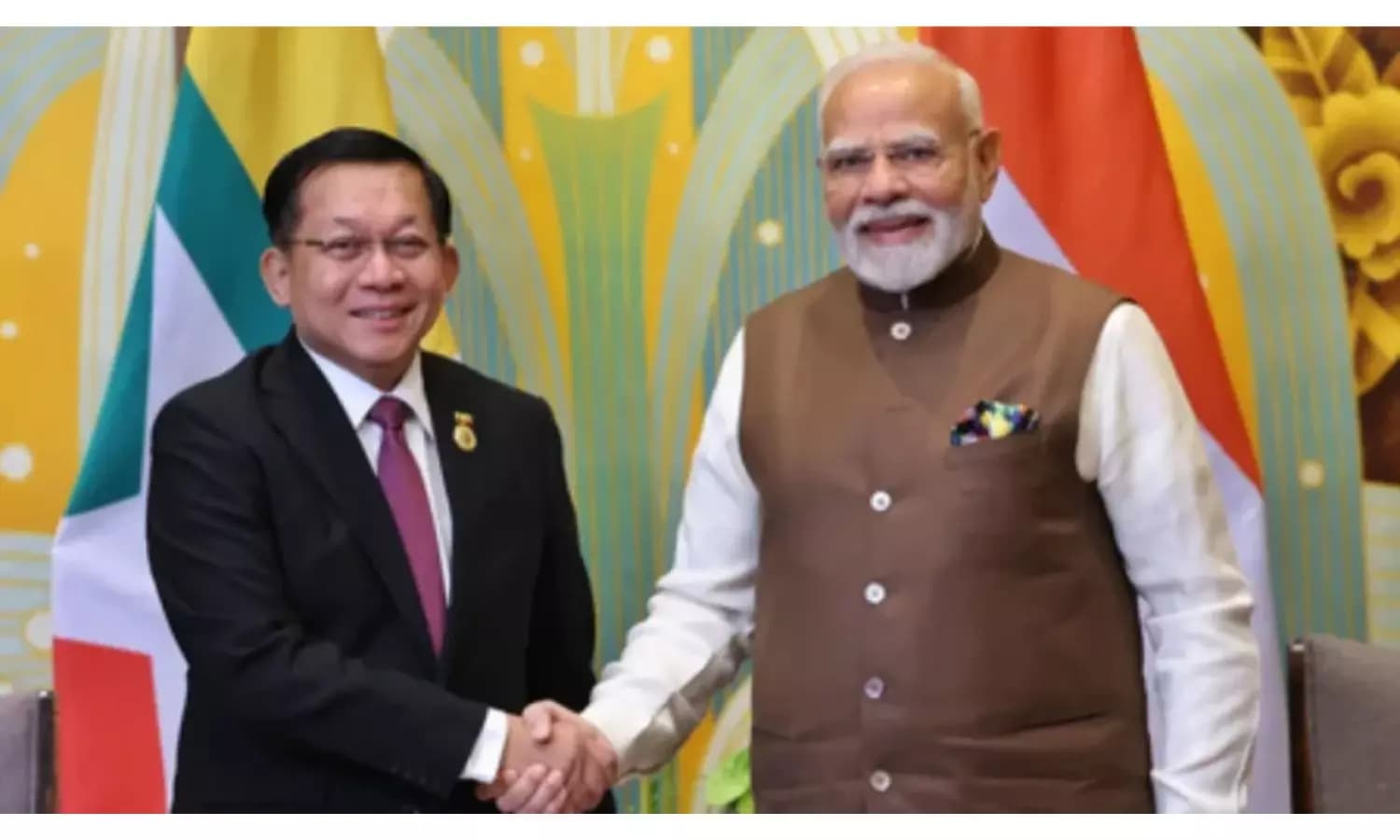
Min Aung Hlaing's visit to India as his first foreign destination post-presidency signals a strategic shift toward diversifying Myanmar's geopolitical alliances away from heavy Chinese influence, emphasizing economic and security cooperation with India.
Highlights
- •Strategic significance of Min Aung Hlaing's visit
- •Creating autonomy in Myanmar's foreign relations
- •Security and economic considerations for Myanmar-India ties
- •Rebalancing Myanmar's geopolitical landscape towards India
Min Aung Hlaing, the Myanmar leader who recently assumed presidency, initiated a carefully calculated diplomatic journey by heading to India first. This five-day visit from May 30 to June 3, 2026, marks more than just routine diplomacy. The itinerary—a series of meetings with Prime Minister Narendra Modi in New Delhi, a business interaction in Mumbai, and a pilgrimage to Bodh Gaya—carries significant implications for both nations.
The Strategic Significance: This visit reflects Myanmar's determination to rebalance its foreign relations away from Beijing. Many analysts expected Min Aung Hlaing to prioritize China but the choice of India as his first destination signals a commitment to diversifying external relationships and avoiding economic isolation or dependence.
India as Counterbalance
The visit represents an effort by Myanmar's military establishment to create strategic autonomy. Historically, Myanmar has viewed China with suspicion—a combination of reliance on its neighbor for infrastructure development and diplomatic support but also a lingering anxiety over Beijing's pervasive presence in key sectors.
Economic and Security Considerations: The business dealings emphasize economic diversification, while political discourse underscores security cooperation. While India offers economic opportunities, the military-to-military tie-ups highlight shared security concerns, especially those linked to border stability and anti-insurgency efforts.
Rapid escalation of tensions with China recently, particularly over infrastructure projects in northern Shan State, has further fueled Myanmar's need for an alternative geopolitical ally. Reports suggest the erection of Chinese borders fences, allegedly into Myanmar territory, have intensified these concerns.
India presents itself as a potential stabilizer in this context. Unlike China, India does not seek to dominate Myanmar or influence its ethnic geography directly. Instead, it operates as a neighbor with shared civilizational values and historical ties through Buddhism.
The long-lasting India-Myanmar border has significant interdependencies beyond just security. Instability on either side affects the other greatly. Thus, enhancing mutual trust and cooperation is vital for both nations' interests.
'Act East' and Northeast Stability: Strategic initiatives like the Kaladan Multi-Modal Transit Transport Project and the India-Myanmar-Thailand Trilateral Highway are designed to connect India's northeastern states with Southeast Asia. Myanmar's stability is crucial for this vision, making Min Aung Hlaing's diplomatic overture towards New Delhi more than just courtesy visits.
India's approach should be multifaceted. While engaging the military-led government, it must also maintain ties with ethnic organizations, civil society, and democratic actors in Myanmar. This balanced engagement can foster a cooperative environment conducive to shared progress and stability.