Mohamed Hany Hits Unwanted Milestone as FIFA World Cup Own Goals Surge
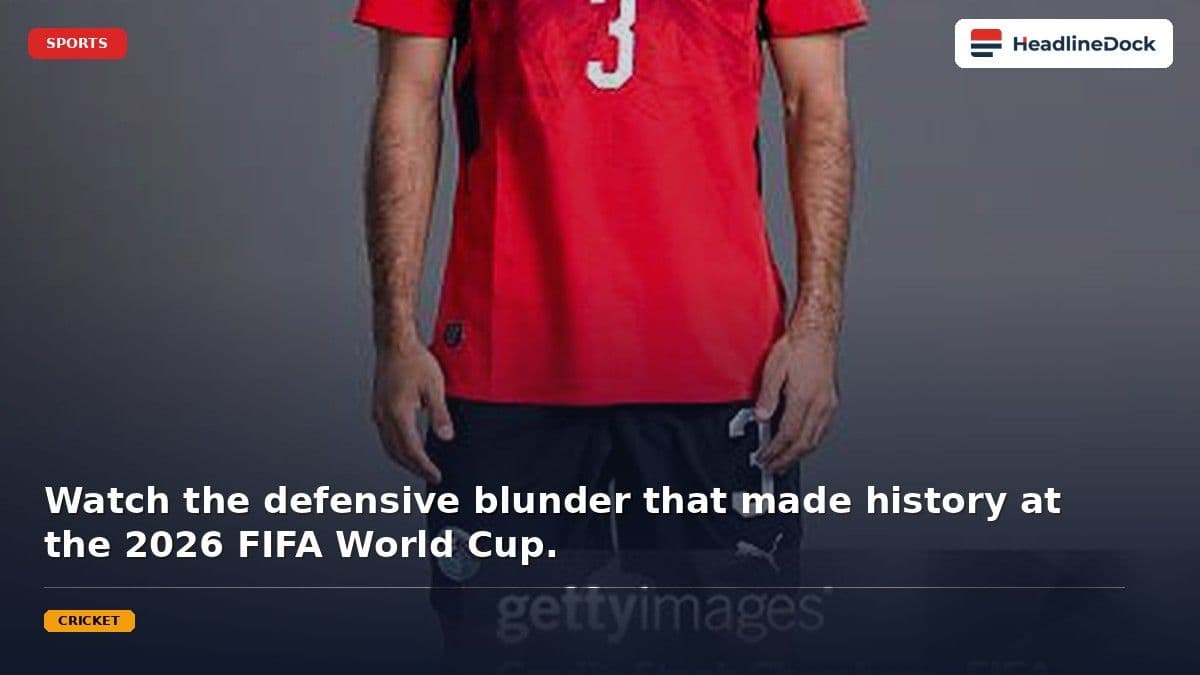
The 2026 FIFA World Cup has set a new record for the most own goals in a single tournament, with Egypt's Mohamed Hany becoming the second player ever to score two own goals in one edition, reflecting the pressure of the expanded competition format.
KEY TAKEAWAYS
1 MIN READ- Mohamed Hany became only the second player in history to score two own goals in a single World Cup.
- The 2026 FIFA World Cup has surpassed the previous record of 12 own goals set in 2018.
- The tournament expansion to 48 teams has contributed to a higher total match count and increased statistical records.
- Defensive errors have been a recurring theme, with various players struggling to clear dangerous set-pieces.
The 2026 FIFA World Cup has reached a notable and somewhat unfortunate milestone, as the tournament officially recorded its 13th own goal. This high frequency of self-inflicted goals has set a new record for a single edition of the global competition, eclipsing the previous mark of 12 set during the 2018 tournament held in Russia. Among the players caught in this statistical trend is Egypt's defender Mohamed Hany, whose recent contribution has drawn significant attention from football fans and analysts alike.
Mohamed Hany and the Record-Breaking Trend
During a high-stakes round of 32 match against Australia, Mohamed Hany accidentally headed a ball into his own net while attempting to clear an Australian set-piece delivery. This moment proved pivotal, as it allowed the opponents to equalize. Statistically, this incident made Mohamed Hany only the second player in history to register two own goals in a single World Cup campaign, matching a long-standing record held by Bulgaria's Ivan Vutsov since 1966.
The current tournament, which has expanded to include 48 teams, involves a larger total of 106 matches. This increased volume of play is naturally leading to more records, both positive and negative. The frequency of own goals has become a major talking point, with various players across different national teams inadvertently altering the scorelines. For instance, teams like Qatar have faced particular difficulties, sharing records for multiple own goals alongside historical performances from previous host nations.
As the competition progresses toward the final rounds, spectators are closely watching to see if the tally of own goals will continue to climb. While many fans appreciate the spectacle of a larger World Cup format, the defensive errors have highlighted the immense pressure players face on the world stage. Whether through miscommunication with goalkeepers or difficult clearances under pressure, these moments have undeniably shaped the narrative of the 2026 tournament.
For players like Mohamed Hany, the tournament serves as a reminder of the fine margins in professional football. As teams prepare for the upcoming stages, maintaining defensive composure will remain a primary focus for coaches aiming to avoid the dreaded own-goal statistic that has become an unexpected hallmark of this year’s competition.