Mining Firms May Bypass UN Rules to Start Commercial Deep-Sea Mining Operations
A Canadian firm seeks to initiate deep-sea mining using a U.S. regulatory path that bypasses UN laws. This move challenges the UN Convention on the Law of the Sea, raising potential legal risks for Canada and concerns regarding the management of international seabed resources.
Highlights
- •The Metals Company (TMC) aims to initiate deep-sea mining by early 2027 under a U.S. regulatory pathway.
- •The U.S. executive order bypasses UNCLOS, which treats the deep seabed as the common heritage of mankind.
- •Legal experts warn that Canada could face international repercussions if its companies are linked to unilateral mining operations.
- •The International Seabed Authority (ISA) asserts that no state has the right to exploit these resources outside established UN legal frameworks.
A Canadian firm may be on the verge of launching commercial deep-sea mining operations, potentially bypassing established United Nations regulations. This development follows a contentious executive order issued by the United States, which has sparked significant legal concerns regarding international maritime law.
The National Oceanic and Atmospheric Administration (NOAA) in the United States recently determined that an application submitted by The Metals Company (TMC), through its American subsidiary TMC USA, meets their current regulatory criteria. This milestone sets the stage for the potential release of an environmental impact statement, with the company aiming to secure operational permits as early as the first quarter of 2027.
Geopolitical and Legal Implications of Deep-Sea Mining
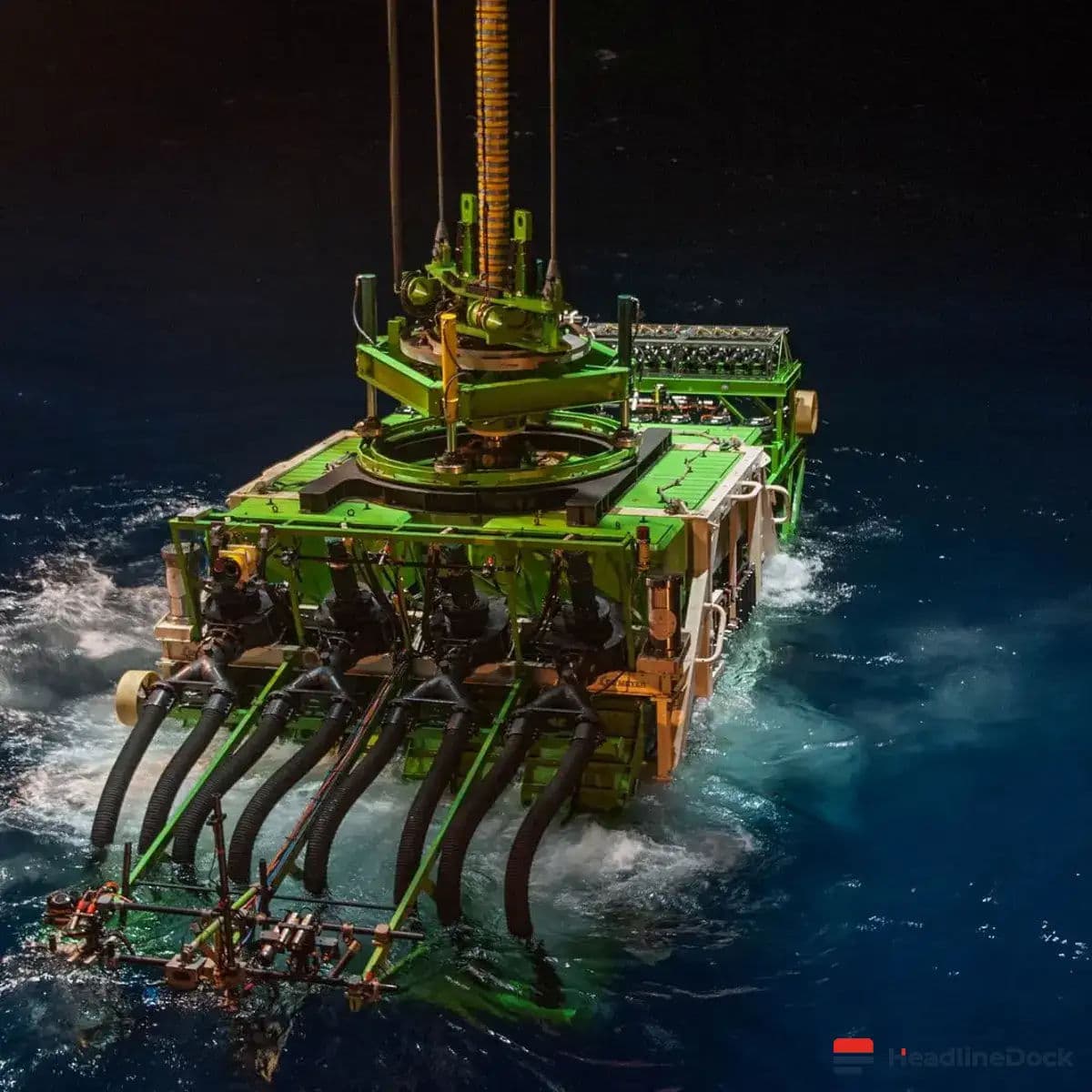
The global demand for essential minerals, such as nickel, cobalt, and various rare earth elements, is driving interest toward the ocean floor. Billions of tonnes of polymetallic nodules sit between four and six kilometres beneath the surface in international waters. While technological advancements make harvesting these resources increasingly feasible, their location outside national territories creates a complex regulatory environment.
The United Nations Convention on the Law of the Sea (UNCLOS) mandates that deep-sea resources represent the “common heritage of mankind.” Approximately 90 per cent of UN member states have ratified this treaty. However, the United States has never ratified UNCLOS. In April 2025, an executive order signed by President Donald Trump directed agencies to fast-track permits for extracting seabed minerals in areas beyond national jurisdiction, effectively circumventing the International Seabed Authority (ISA).
Leticia Carvalho, Secretary-General of the ISA, has publicly challenged this approach, stating that unilateral exploitation of these resources remains inconsistent with established legal frameworks. Despite these protests, U.S. officials maintain that their country is not bound by UNCLOS rules concerning seabed mining, pointing instead to the older, largely dormant Deep Seabed Hard Minerals Resources Act.
Canada’s Responsibility and Regulatory Scrutiny
A critical question has emerged regarding whether Canada, a signatory to UNCLOS, could face international legal consequences if its companies participate in these activities via American subsidiaries. Legal experts suggest that if a subsidiary lacks functional independence from its Canadian parent company, Canada could be held accountable for violating the convention.
UNCLOS member states have a clear duty to ensure that no entity under their jurisdiction engages in unauthorized mining. Breaching these requirements could expose Canada to proceedings before the Seabed Disputes Chamber. Although the Canadian government expressed support for a moratorium on such mining in 2023, it has yet to take a definitive stance on these specific unilateral efforts. As the July 2026 ISA assembly approaches, international attention remains fixed on whether Canada will intervene to address these controversial deep-sea mining initiatives.