Medigadda Barrage Poised for Significant Water Inflow Despite Infrastructure Challenges
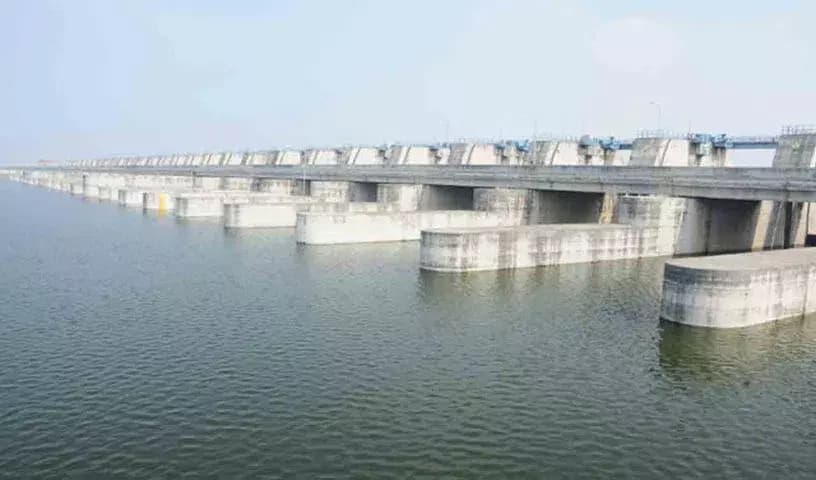
Although the Medigadda barrage remains non-operational due to required repairs, it is projected to receive substantial water inflows. Experts propose utilizing temporary coffer dams to capture and manage this vital resource to support irrigation needs during the anticipated deficit monsoon.
Highlights
- •The non-operational Medigadda barrage is expected to handle significant water inflows during the current monsoon season.
- •Technical projections suggest Medigadda could receive up to 300 tmc ft of water by late July despite deficit forecasts.
- •Experts recommend building temporary coffer dams to enable water storage and pumping across the Kaleshwaram system.
- •Failure to capture available Godavari water could lead to public frustration if the monsoon season falls short of expectations.
Despite ongoing concerns regarding the performance of the upcoming monsoon, the Medigadda barrage, situated on the Godavari river in Telangana, is projected to receive significant water inflows. Although the facility is currently non-operational and has been the subject of intensive investigations, it remains a critical point for water movement as seasonal rains begin to intensify across the region.
Water Management and Infrastructure Challenges
Although rainfall is expected to revive across Telangana and the upper catchment areas of the Godavari and Pranahita rivers, the Medigadda barrage, along with its counterparts at Annaram and Sundilla, remains idle due to necessary repair requirements. These structures, integral components of the Kaleshwaram Lift Irrigation Scheme (KLIS), are currently unable to facilitate water storage. Nevertheless, government projections indicate that the barrage could manage substantial daily inflows of 3,000 to 3,800 cusecs through the end of June, with significantly higher volumes expected by early July.
Experts suggest that technical models from the India Meteorological Department and the European Centre for Medium-Range Forecasts estimate the Medigadda barrage may handle up to 300 tmc ft of water by late July. In a standard monsoon season, typical flows at this location reach between 2,000 and 2,700 tmc ft. While the current year is anticipated to be deficit-prone, officials emphasize the importance of implementing temporary measures to capture this valuable resource rather than allowing it to flow away.
Proposed Temporary Solutions for KLIS
Officials familiar with the Medigadda, Annaram, and Sundilla sites have proposed a pragmatic approach to address the current crisis. The strategy involves the construction of coffer dams at upstream locations. By employing these temporary structures, the government could effectively regulate and store water, enabling pumping operations from Medigadda to Annaram, then to Sundilla, and eventually to the Sripada Yellampalli reservoir. This would maximize the functionality of the existing KLIS framework.
While the political sensitivity surrounding these infrastructure projects has led to uncertainty regarding the implementation of such measures, proponents argue that any available water during a potential drought year is essential. Advocates for this plan highlight that coffer dams are cost-effective and can be constructed rapidly. One source noted that even a partial implementation—such as protecting the damaged block 7 while closing the remaining gates—would allow for the immediate resumption of pumping activities. If these available resources are not utilized, officials warn that public dissatisfaction may rise as the monsoon progresses.