Margaret Atwood Slams Artificial Intelligence As A Source Of Misinformation
Renowned author Margaret Atwood has warned against the limitations of artificial intelligence, labeling it as 'garbage in, garbage out' during a literary event. She shared how AI failed to provide accurate answers and voiced concerns over its impact on reliability, media control, and political discourse.
Highlights
- •Margaret Atwood criticizes AI, calling it 'garbage in, garbage out' due to reliability issues.
- •The author shared how an AI model failed to accurately answer a simple question about a TV show.
- •Atwood addressed her books being targets of bans, viewing them as effective marketing gimmicks.
- •She expressed concerns regarding the state of political discourse and media ownership in the US.
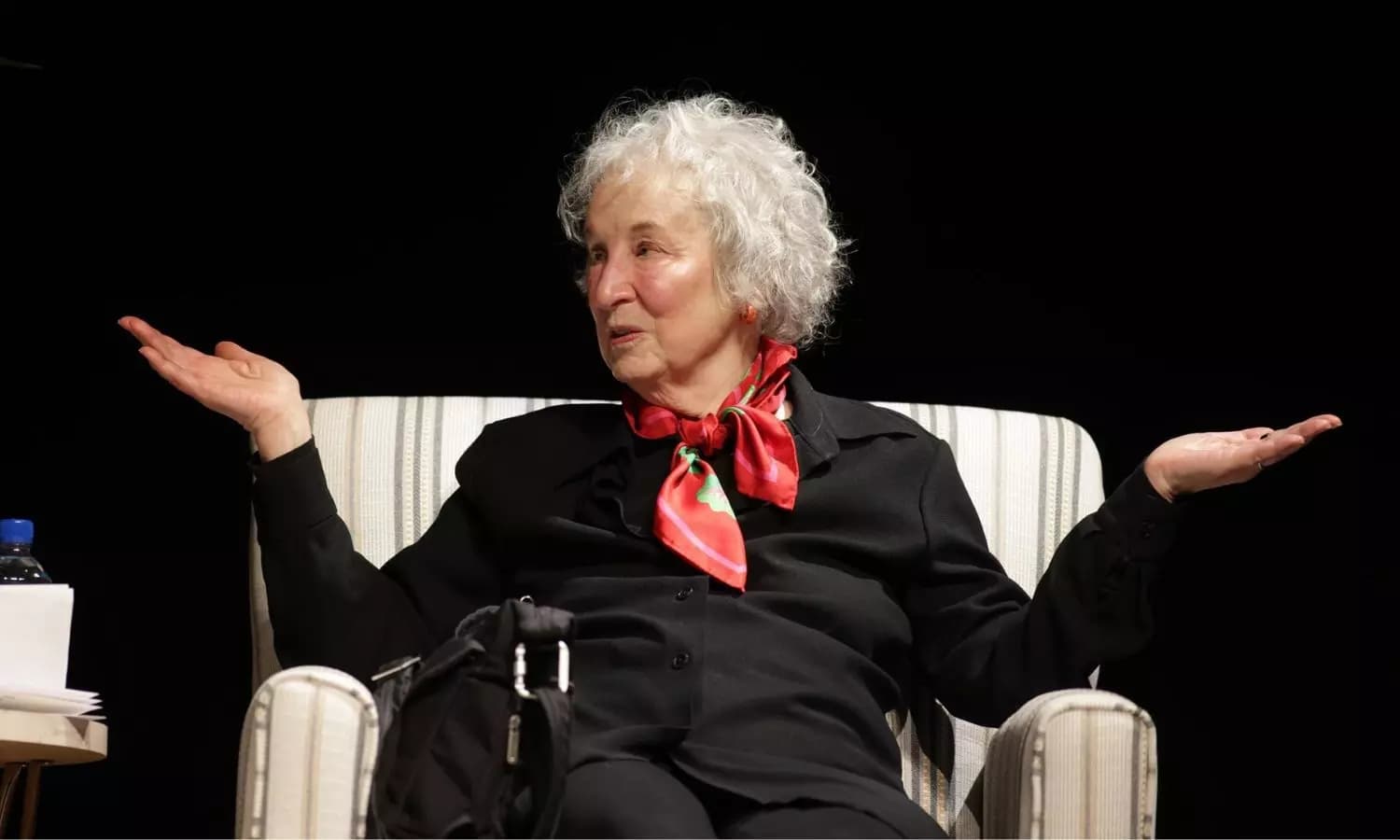
Renowned Canadian author Margaret Atwood has issued a stern critique of artificial intelligence, describing the technology as an engine for misinformation rather than a reliable tool. During a candid appearance at the Babell Literary and Cultural Festival in Porto, Portugal, Atwood utilized a colorful phrase to summarize her perspective: garbage in, garbage out.
The celebrated writer, widely recognized for her seminal works including The Handmaid's Tale, shared an experience regarding her singular attempt to engage with Anthropic's Claude AI. Seeking to resolve a mystery surrounding the British detective series Father Brown, she turned to the chatbot. Instead of providing an accurate plot detail, the language model delivered incorrect information. Atwood noted that the model, lacking human comprehension, merely extrapolated from online discussions that cleverly avoided revealing the show’s ending. This encounter served as a primary example of why artificial intelligence cannot be trusted to handle information without rigorous human verification.
Addressing Reliability and Censorship in the AI Era
Beyond personal anecdotes, Atwood raised broader questions about the ethics and reliability of modern large language models. She argued that because these systems are trained on massive datasets of existing human-generated content, they remain inherently susceptible to flawed logic and inaccuracies. Atwood warned that while artificial intelligence might be integrated into business processes, the persistent risk of errors makes manual oversight indispensable. She suggested that humans often look for shortcuts to gain an advantage, yet cautioned that relying on a machine that can be easily led astray is a dangerous practice.
The conversation naturally flowed into the topic of literary censorship, a domain Atwood has navigated throughout her storied career. She addressed the frequency with which her own books, particularly The Handmaid's Tale, have appeared on school district bans. With her characteristic wit, she framed the controversy as a unique promotional tool. She observed that when authorities declare a book too provocative, it often piques the curiosity of the public, leading to increased interest rather than suppression.
While Atwood reflected on the protections offered by life in Canada, she voiced concerns regarding the sociopolitical trajectory of the United States. She expressed unease about attempts to stifle political dissent, which she views as a warning sign in any society. Furthermore, Atwood commented on the concentration of media ownership, specifically noting the influence of billionaires acquiring legacy press outlets. However, she remained observant of emerging digital alternatives that are fostering new spaces for expression. The literary icon concluded her session with signature humor, declining to name a favorite work among her own novels to avoid offending her other creations.