Lucy Fossil Exhibit in Abu Dhabi Marks a New Era for Human Evolution
The iconic 3.2 million-year-old Lucy fossil has arrived at the Natural History Museum Abu Dhabi. This collaborative exhibit marks a shift in how African heritage is shared globally, emphasizing international partnership and a new era for paleoanthropology research.
Highlights
- •The 3.2 million-year-old Lucy fossil is currently on display at the Natural History Museum Abu Dhabi.
- •The discovery of Lucy in 1974 confirmed that upright walking preceded the expansion of the human brain.
- •The exhibition highlights a collaborative shift in paleoanthropology, with Ethiopian authorities leading the management of their heritage.
- •Lucy is scheduled to return to the National Museum of Ethiopia in Addis Ababa in July 2026.
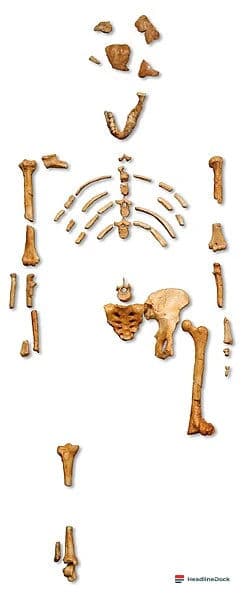
At the Natural History Museum Abu Dhabi, a profound connection to human history is being forged through the display of Lucy, the famous 3.2 million-year-old Australopithecus afarensis fossil. This exhibit offers visitors a rare opportunity to engage with a landmark figure in human evolution, whose discovery in 1974 by a team led by Donald Johanson in Ethiopia fundamentally altered scientific perspectives on our origins.
For decades, the story of human evolution has centered on the remarkable revelation provided by Lucy. Her remains proved definitively that the ability to walk upright emerged long before the significant expansion of the human brain. Known affectionately as Dinknesh, meaning “you are marvelous” in Amharic, this specimen has become an iconic ambassador for Ethiopian natural and cultural heritage, bridging the gap between ancient history and modern audiences.
The Global Journey of a Landmark Fossil
The transport of such a fragile and scientifically priceless fossil required extreme precision and secrecy. In the months leading up to the Natural History Museum Abu Dhabi opening in November 2025, a specialized team worked in close collaboration with the Ethiopian Heritage Authority and the National Museum of Ethiopia. Every bone was meticulously packed and secured in custom-designed travel cases to ensure total preservation during the journey to the United Arab Emirates.
This initiative represents a significant departure from historical models of paleoanthropology, which often saw African discoveries moved to Western institutions without local control. Instead, this project emphasizes collaboration over colonialism. By sharing the fossil, Ethiopia is asserting leadership over how its scientific history is interpreted, displayed, and preserved on the global stage. This partnership model is intended to foster trust and strengthen institutions in both Ethiopia and the UAE, paving the way for future research and academic exchange.
The exhibit has had a profound impact on visitors, who often perceive the fossil not merely as a scientific artifact but as a distinct individual who once moved through the world. The display is carefully curated to prompt reflection on shared history, biodiversity, and the environment. When the fossil returns to Addis Ababa in July 2026, it will leave behind more than just the memory of a successful exhibition; it will cement a lasting relationship between these nations. By bridging different regions and perspectives, this project illustrates that the future of science relies heavily on international cooperation, mutual respect, and the recognition of a shared global past.