Is Tilling the Soil Still Necessary for Modern Sustainable Agriculture?
Is abandoning tilling the key to sustainable farming? Research suggests that while reducing soil cultivation has benefits, it also involves complex trade-offs regarding pesticide use, greenhouse gas emissions, and actual carbon storage that require strategic, context-specific approaches.
Highlights
- •The traditional practice of tilling is being re-evaluated for its true impact on soil health and sustainability.
- •Reduced tillage often leads to higher herbicide usage, presenting a new challenge for chemical-free farming.
- •Total soil carbon storage depends more on biomass inputs like cover crops than on the absence of plowing.
- •No-till systems can sometimes increase nitrous oxide emissions, potentially offsetting carbon storage benefits.
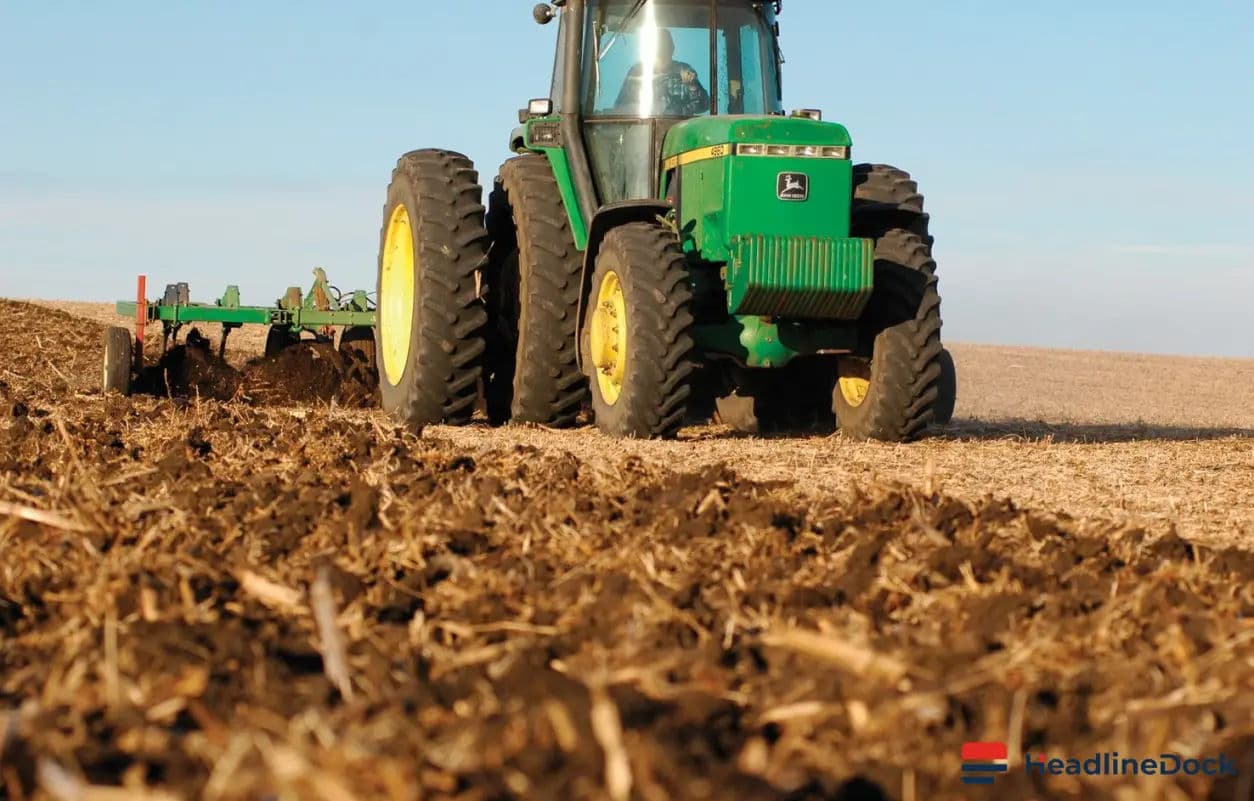
For generations, the act of tilling the soil has been fundamental to farming, so much so that historical terms for farmers were often derived from the word for plowing. However, modern agronomic practices are increasingly questioning whether traditional soil cultivation remains the most effective strategy for sustainable agriculture. While reducing or eliminating plowing is frequently touted as a benefit for soil structure, biodiversity, and climate change, a more nuanced perspective is required to understand the full impact of these decisions.
Evaluating the Environmental Impact of Tilling
The term soil cultivation encompasses a broad range of mechanical actions, including plowing, harrowing, and hoeing. These interventions serve several purposes: they improve aeration, manage water infiltration, prepare the seedbed for crop development, and control weeds. Nevertheless, intensive tilling can degrade soil structure, accelerate erosion, and potentially release stored carbon back into the atmosphere as carbon dioxide (CO₂). This has led to the rise of conservation agriculture, which champions practices like direct seeding to minimize mechanical disruption.
Recent scientific syntheses, including studies published in Communications Earth & Environment, suggest that the environmental benefits of no-till farming are often less clear-cut than popular discourse implies. One significant issue is that systems eschewing tilling often rely more heavily on herbicides, such as glyphosate, to manage unwanted vegetation. Research conducted at experimental sites like CA-SYS in Dijon, France, demonstrates that while occasional tillage can be a strategic tool to reduce pesticide dependence, blanket abandonment of the plow can lead to challenges with weed pressure and crop productivity.
The Complexity of Carbon Storage and Greenhouse Gases
A primary argument for reducing tilling involves the potential for improved carbon sequestration. While it is true that non-plowed fields may show higher concentrations of organic matter in the very top layer of the soil, this often represents a redistribution rather than an actual increase in total carbon stock. Long-term trials, such as those conducted by Arvalis in Boigneville, have shown that over several decades, total soil carbon stocks may not differ significantly between plowed and no-till systems.
Instead of focusing solely on the depth of cultivation, experts emphasize that carbon storage is primarily driven by the quantity of plant biomass—such as roots and residues—returned to the land. Furthermore, the issue of greenhouse gases is complicated by emissions of nitrous oxide (N₂O). Because no-till fields can retain more surface moisture, they sometimes create conditions that promote the release of N₂O, a gas with a significantly higher global warming potential than CO₂. Therefore, moving toward sustainable agriculture requires moving beyond simplistic binary debates and instead adopting diversified crop rotations, cover crops, and integrated strategies that account for local environmental contexts.