India's Pharmaceutical Supply Chain Remains Heavily Dependent on Chinese API Imports
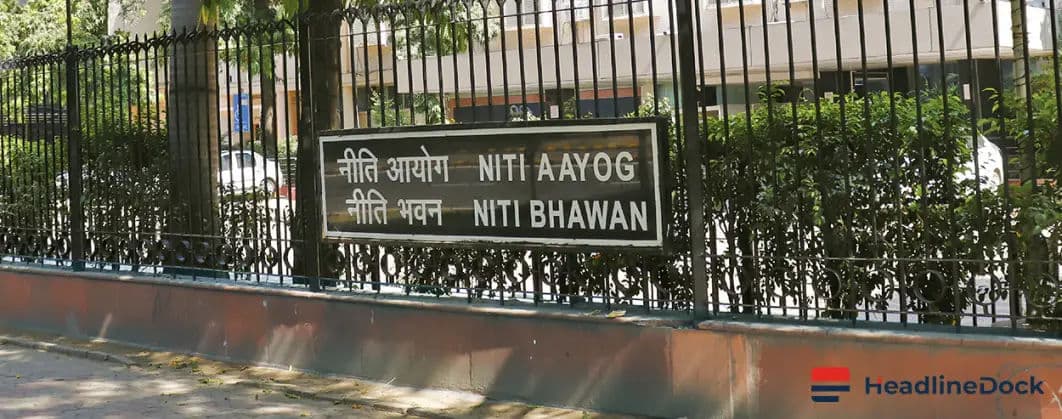
A recent NITI Aayog report highlights that India's pharmaceutical supply chain remains 65% dependent on Chinese imports for critical APIs. The think-tank suggests prioritizing innovation and high-value product development to reduce external reliance and enhance the global competitiveness of the Indian pharma sector.
Highlights
- •India's pharmaceutical supply chain remains 65% dependent on Chinese imports for APIs and KSMs.
- •NITI Aayog identifies weak innovation and high R&D costs as major sector challenges.
- •The government is urging companies to move toward high-value segments to improve market positioning.
- •India currently supplies a significant portion of generic medicine demand to the US, UK, and Africa.
The latest report from the NITI Aayog has brought into focus a critical aspect of the domestic healthcare industry: its continued reliance on external sources for raw materials. According to the government’s policy think-tank, India’s pharmaceutical supply chain remains significantly dependent—to the tune of 65 percent—on imports from China. This dependency is particularly acute for essential Active Pharmaceutical Ingredients (APIs), key starting materials, and intermediate compounds, especially those involving fermentation-based manufacturing processes.
The assessment, detailed in the eighth edition of the ‘Trade Watch Quarterly’, highlights that while India is widely recognized as the “pharmacy of the world,” the industry faces structural hurdles. Factors such as underdeveloped innovation pipelines and an inadequate commercialization ecosystem have resulted in uncertainty for both long-term investors and innovators. Furthermore, the report notes that escalating environmental compliance standards have added pressure, driving up costs associated with manufacturing and research and development (R&D).
Addressing Pharmaceutical Supply Chain Vulnerabilities
To mitigate these challenges, the NITI Aayog has advocated for a shift in strategy, urging the industry to diversify into high-value pharmaceutical segments. The organization emphasizes the need for enhanced regulatory transparency and robust industry-academia technology transfer within life-sciences clusters. These measures are intended to foster research collaboration, accelerate the commercialization of patents, and boost the incubation of pharmaceutical startups across the country.
Ashok Kumar Lahiri, Vice Chairman of NITI Aayog, underscored during the report's release that although India holds a reputable position in the global market, it must strive to move higher up the value chain. He expressed confidence that domestic companies could secure a greater international market share by focusing on high-quality, competitively priced branded products. The objective is to transition from merely maintaining volume-based dominance to establishing leadership in value-added pharmaceuticals.
Currently, the country plays a pivotal role in the global health landscape as a major supplier of affordable generic medications. Indian pharmaceutical exports currently account for approximately 50 percent of the generic requirements in Africa, 40 percent in the USA, and 25 percent in the UK. With the total global market demand for drugs and pharmaceuticals reaching $1.3 trillion in 2025—a figure divided between $1.02 trillion for finished pharmaceuticals and $261 billion for APIs—the potential for strategic growth remains significant. By addressing these upstream dependencies, the industry aims to ensure long-term sustainability and economic resilience in an increasingly competitive global environment.