Hyderabad’s Encroached-Footpaths Create Ongoing Hurdles for Daily Pedestrian Safety
In Hyderabad, the persistent issue of encroached-footpaths forces pedestrians into busy roads. Despite government removal drives, shops and illegal structures frequently reclaim walkways, highlighting a major gap in urban planning and pedestrian infrastructure across the city.
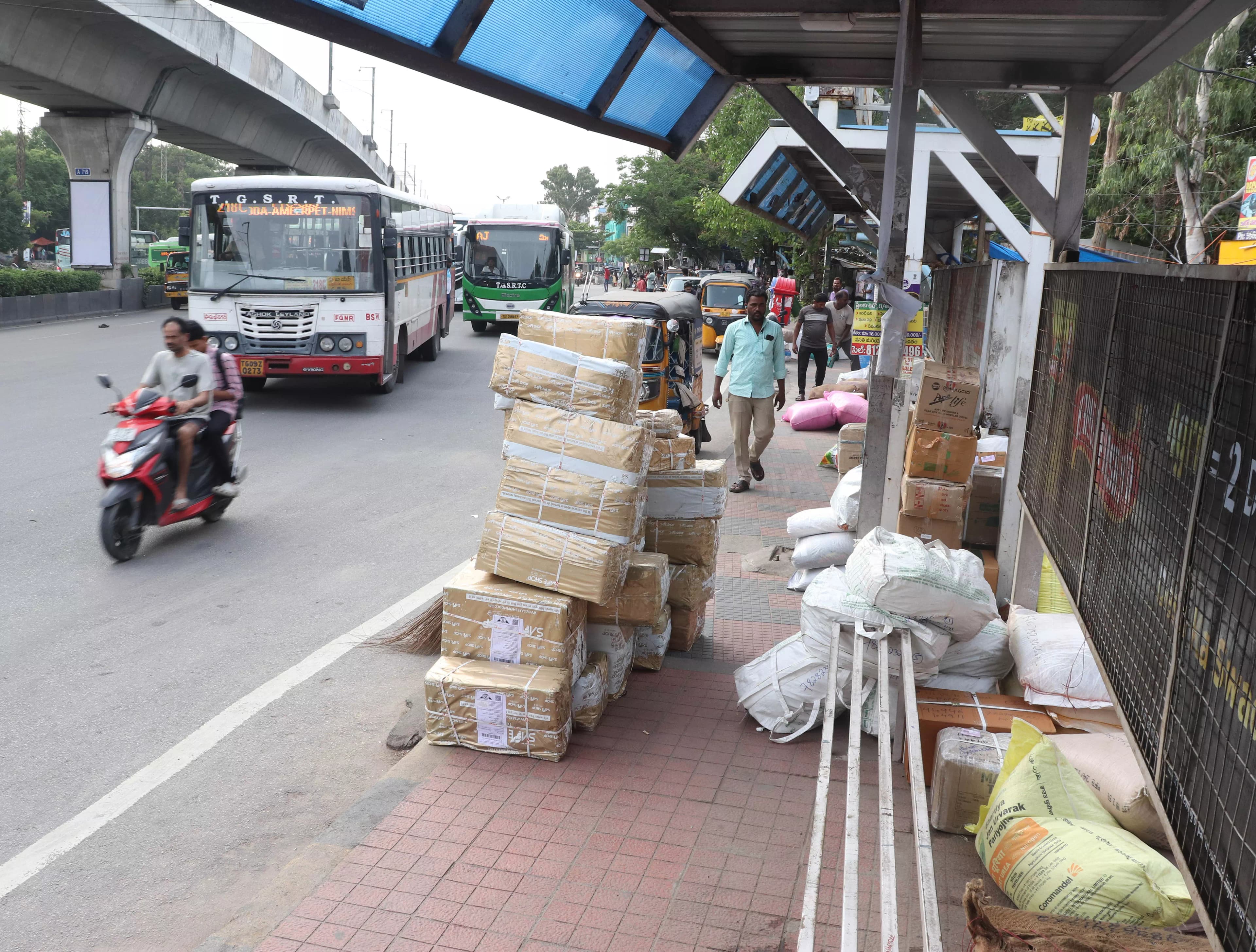
In Hyderabad, the persistent issue of encroached-footpaths continues to pose a significant threat to pedestrian safety. Despite repeated efforts by civic authorities to clear public walkways, these spaces remain frequently occupied by commercial displays, parked vehicles, and temporary structures, effectively forcing residents to navigate through busy traffic lanes.
Across major commercial hubs and various residential colonies, the city’s infrastructure intended for pedestrians has been largely compromised. While local authorities initiate periodic removal drives, many of these obstructions return within a matter of days. For the average citizen, this has transformed simple daily walking into a hazardous obstacle course, with limited options for safe transit.
Infrastructure Challenges and Encroachment Issues
The state of pedestrian walkways in the city is dire, with recent data highlighting a stark lack of proper infrastructure. According to the ‘Socio Economic Outlook of 2024’ issued by the government, the Greater Hyderabad Municipal Corporation (GHMC) maintains a road network spanning approximately 9,013 kilometres. However, designated footpaths exist for only about 850 kilometres, covering less than 10 per cent of the total road length.
Many pedestrians, including local residents like Shashank in Sultan Bazaar, have voiced concerns that the government focuses heavily on large-scale infrastructure like flyovers while neglecting the basic necessity of continuous, safe walking paths. This lack of space is further aggravated by items such as construction materials, power poles, and garbage bins that clutter already narrow pavements.
Conversely, local business owners, such as Aditya Bansal from Monda Market, suggest that utilizing the immediate area around their storefronts is often necessary for visibility and attracting customers. While they maintain they do not intend to fully block access, this practice is a widespread contributing factor to the current crisis.
Enforcement Efforts by Civic Authorities
The GHMC has emphasized that they are committed to addressing these encroached-footpaths through consistent vigilance. Officials reported that on a recent Saturday, a total of 283 encroachments—comprising 204 temporary and 79 permanent structures—were cleared across their jurisdiction.
Since April of this year, the total number of removed obstructions has reached 2,620. In specific regions such as Narsingi and Manikonda, authorities successfully cleared areas occupied by street-side vendors, with reports indicating some of these locations remained clear post-action. However, in high-traffic zones like Secunderabad, the pattern of returning encroachments remains a recurring hurdle. Civic officials have issued warnings to shopkeepers and residents, reiterating that any further obstruction of public space will face strict administrative action to ensure both safety and clear traffic movement.
,curated_key_highlights:[