Hyderabad Mobilizes Massive Emergency Teams as Monsoon Season Approaches
To combat unpredictable monsoon rainfall, Hyderabad authorities have mobilized 51 Disaster Response Force teams and 300 Monsoon Response Teams. The city is focusing on infrastructure monitoring and land protection to mitigate flood risks and ensure the safety of its citizens.
Highlights
- •Hyderabad has deployed 51 DRF teams, 300 MRTs, and 889 static teams for monsoon readiness.
- •Minister Ponnam Prabhakar highlighted the challenge of increasingly unpredictable and intense rainfall patterns in the city.
- •New bike-based quick response units have been launched to rapidly address issues like fallen trees and waterlogging.
- •HYDRAA is actively working to protect government lands and lakes to prevent artificial flooding caused by encroachments.
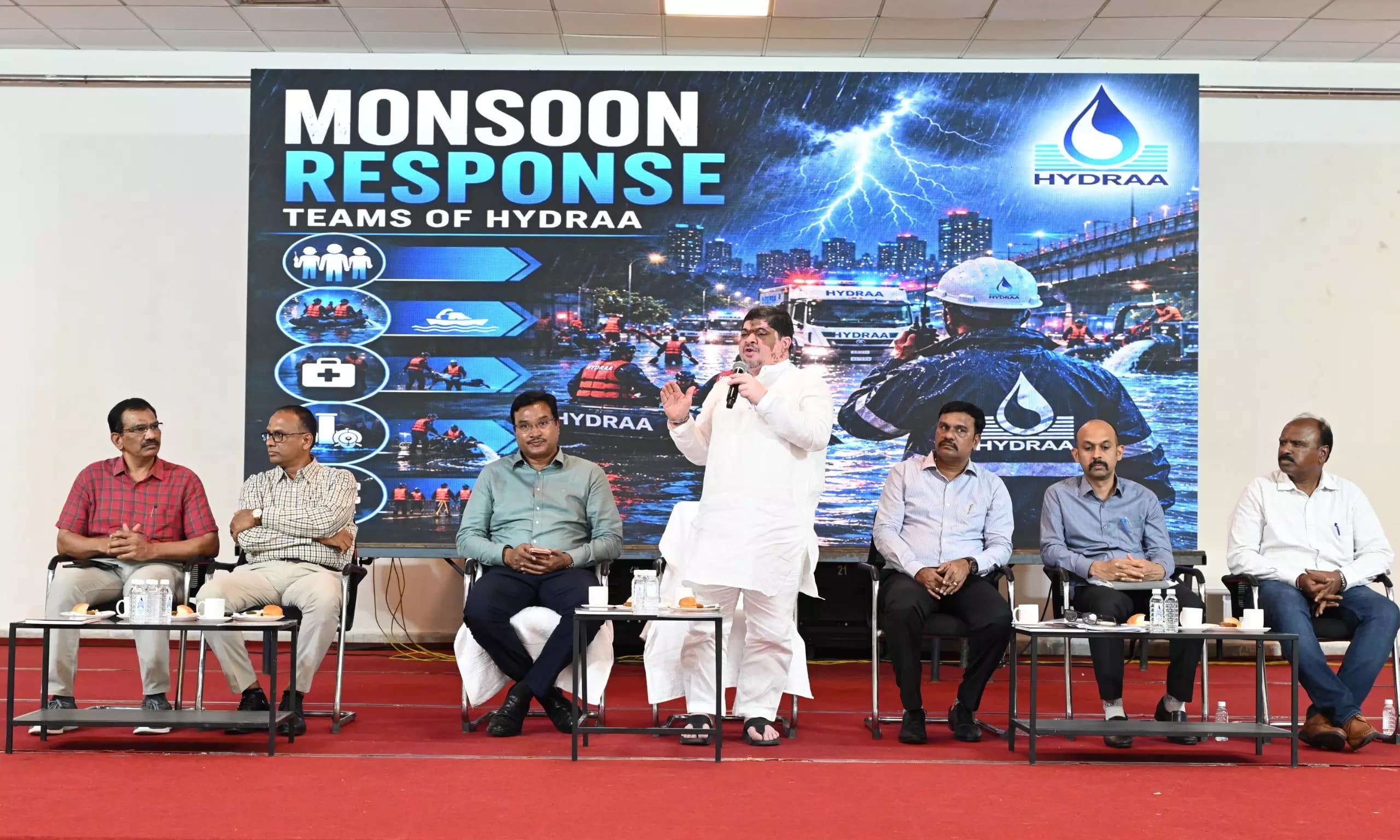
The city of Hyderabad is gearing up for the monsoon season, with authorities prioritizing public safety and flood mitigation. Ponnam Prabhakar, the City Incharge Minister, has officially directed the Hyderabad Disaster Response and Asset Protection Agency (HYDRAA), specifically the Disaster Response Force (DRF) and various Monsoon Response Teams (MRT), to maintain a state of high alert to prevent citizens from facing distress during heavy rainfall.
Speaking at a strategic gathering held at Jalavihar, the minister emphasized the urgency brought on by shifting weather patterns. He highlighted that the city is increasingly experiencing unpredictable and intense rainfall, where a month's worth of expected precipitation can occasionally occur within a single day or even a single hour. This volatility necessitates constant vigilance and rapid deployment of emergency services.
Preparedness Strategies for Monsoon Emergencies
HYDRAA Commissioner A. V. Ranganath confirmed that comprehensive preparations are now in place to manage monsoon-related emergencies. The city's tactical response capabilities include the deployment of 51 DRF teams, 300 MRTs, and 889 static teams stationed across various zones. Notably, the former Monsoon Emergency Teams have been rebranded as MRTs at the suggestion of the minister to better streamline field operations.
To further enhance agility, 20 specialized bike-based quick response units have been introduced. These units are designed to reach locations rapidly, particularly to address common monsoon hazards such as fallen trees or localized waterlogging. Furthermore, the authorities have strategically positioned 371 de-watering pumps in flood-prone areas. Infrastructure monitoring is also being prioritized, with continuous observation of 60 flyovers, 38 underpasses, and 705 lakes to ensure the city’s drainage and transport systems remain functional.
Asset Protection and Land Management
Beyond emergency response, Commissioner Ranganath underscored the ongoing mission of HYDRAA to safeguard government-owned lands and critical water bodies. During a round-table conference, he reiterated the agency's commitment to fighting the unauthorized occupation of public assets, including storm-water drains, lakes, and parklands. He argued that these encroachments significantly contribute to city-wide flooding issues. While addressing concerns regarding public perception, the Commissioner stated that the agency remains focused on legal enforcement against encroachers, despite efforts by some parties to undermine the agency's reputation through misinformation.
As the monsoon season intensifies, the combination of proactive disaster management and the protection of essential land resources remains a central focus for Hyderabad. Residents are advised to stay informed through official channels as the authorities continue to monitor weather developments to minimize potential risks to public safety and infrastructure.