Hunger and the Mind: How Your Brain 'Tastes' Food Before Eating
New research reveals that hunger enhances our 'mental imagery,' allowing the brain to simulate the taste and texture of food before eating. This explains why cravings feel so vivid and why resisting them requires more than just willpower.
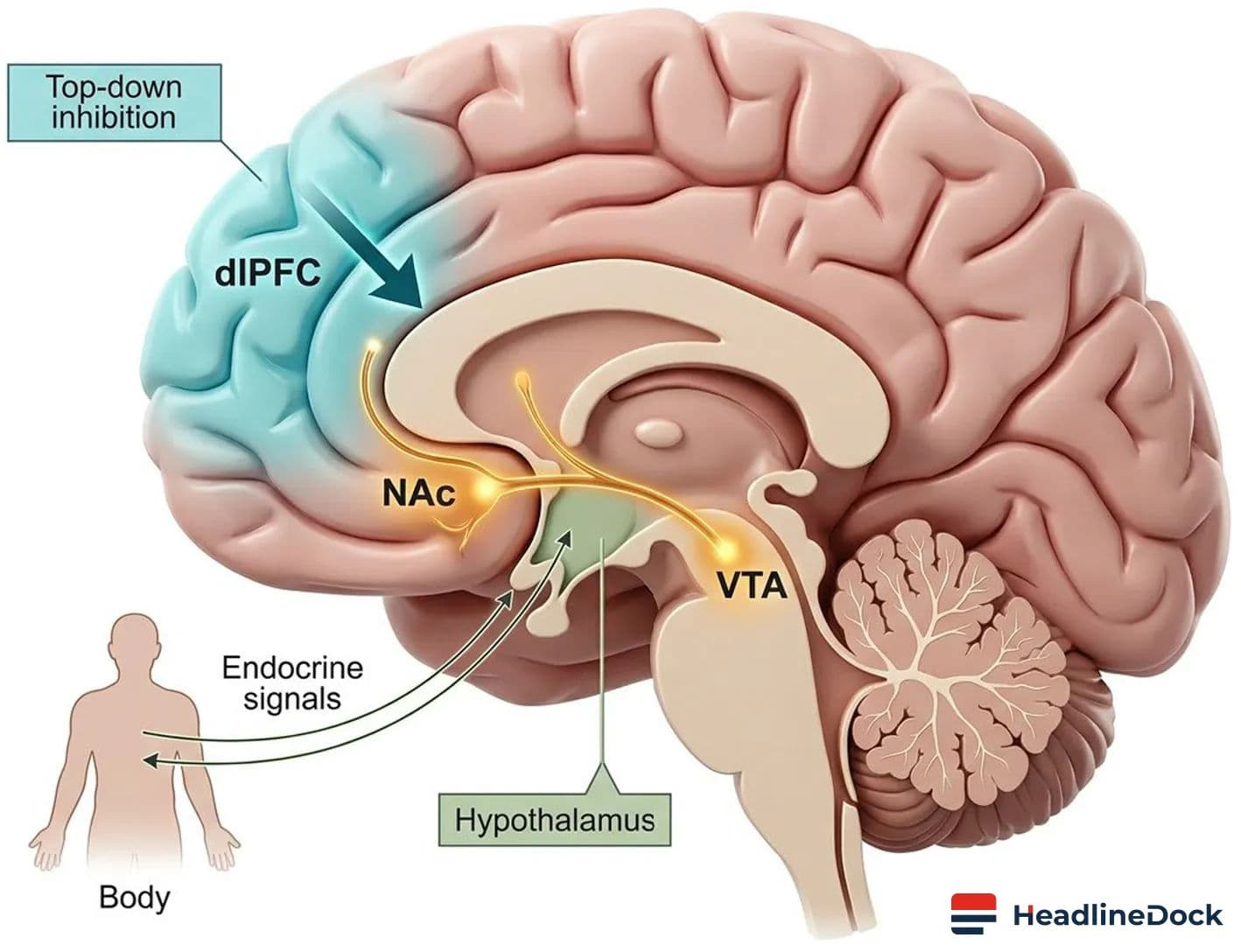
Highlights
- •New research indicates that hunger enhances the brain's ability to simulate the taste and sensory experience of eating food.
- •Mental imagery related to food is not fixed and varies in vividness depending on a person's current hunger state and motivation.
- •While repeatedly imagining a food can reduce its mental appeal, it does not diminish the actual enjoyment of eating the real item.
- •Understanding these mental processes helps explain why cravings become more intense and why willpower alone can be difficult to maintain.
We have all encountered the scenario where a quick trip to the grocery store on an empty stomach leads to a shopping cart overflowing with indulgent treats. This common experience is often attributed to the idea that hunger makes our eyes larger than our stomachs. However, recent scientific research suggests that food cravings go much deeper, actually altering our mental imagery and how we visualize the sensory experience of eating before we even take the first bite.
For humans, eating is a profoundly multisensory experience that spans from the initial visual appeal of a meal to its aroma and subsequent taste and texture. Because past dining experiences leave lasting impressions on the brain, we can recreate these sensations using mental imagery. This capacity allows us to mentally conjure up the sour tang of a lemon or the rich, comforting scent of fresh coffee. Interestingly, researchers have found that this ability varies significantly among individuals, and it is not a fixed trait; our internal states, such as hunger, can influence how easily we generate these sensory impressions.
How Hunger Shapes Food Cravings
In a study conducted at the University of Otago in Dunedin, 60 participants were observed under two different conditions: after fasting overnight and after consuming a full breakfast. When participants were hungry, they reported that it was significantly easier to generate vivid flavour imagery compared to when they were satiated. They were also more capable of picturing themselves consuming the food and reported higher levels of anticipated enjoyment.
These findings indicate that hunger does more than just trigger a desire for calories; it actively enhances how the mind simulates the entire process of eating. This can make food cravings feel overwhelming, as they bring with them a simulated banquet of taste, smell, and expected pleasure. This explains why willpower alone often fails for those on restrictive diets, as increasing hunger makes thoughts of specific foods more vivid and immediate.
The Limits of Mental Imagination
The research also explored whether repeatedly imagining the consumption of specific foods could diminish their appeal. While it was found that consistent imagination can eventually make an imagined food seem less appealing, this effect does not extend to the actual act of eating. Participants maintained their enjoyment when consuming the real item, highlighting the clear distinction between the power of mental imagery and the reality of physical consumption.
Living in a world saturated with external food cues—from supermarket displays to social media advertising—means our imagination is frequently triggered. Understanding the interplay between hunger and our sensory imagination is crucial for navigating modern dietary environments. By recognizing these internal forces, individuals may find better strategies to manage their food choices and navigate a landscape where temptation is constantly present.