How Weight-Loss Drugs Like Ozempic Could Help Treat Addiction Disorders
Scientific research is uncovering how GLP-1 agonists like Ozempic may curb addiction. By targeting the lateral septum, these weight-loss drugs appear to disrupt reward-processing pathways in the brain, offering a new potential approach for treating substance dependence and overeating.

Highlights
- •GLP-1 agonists like Ozempic are showing promise in reducing cravings for alcohol, nicotine, and various drugs.
- •The lateral septum in the brain is identified as a potential key region where these drugs exert anti-addiction effects.
- •The lateral septum processes reward-related information and contains a high density of GLP-1 receptors.
- •New research into brain connectivity is shifting the focus of addiction treatment toward these specific neural pathways.
The potential for weight-loss drugs, such as Ozempic and Wegovy, to assist in treating addiction is becoming a focus of intense scientific study. Researchers are beginning to unravel the mechanisms behind how these medications, known as GLP-1 agonists, might influence brain regions associated with reward and craving, offering hope for addressing complex behavioral issues ranging from obesity to substance misuse.
Historically, the link between vivid mental imagery and the motivation to consume rewarding stimuli—like food or alcohol—has been recognized but remained difficult to treat. While GLP-1 agonists were originally developed for managing type 2 diabetes by regulating insulin and promoting satiety, their secondary impacts on appetite and cravings have been significant. Emerging evidence suggests these drugs may reduce the urge for alcohol, cocaine, amphetamines, opiates, and nicotine, marking a potential shift in therapeutic strategies for addiction.
Uncovering the Brain’s Reward Control Center
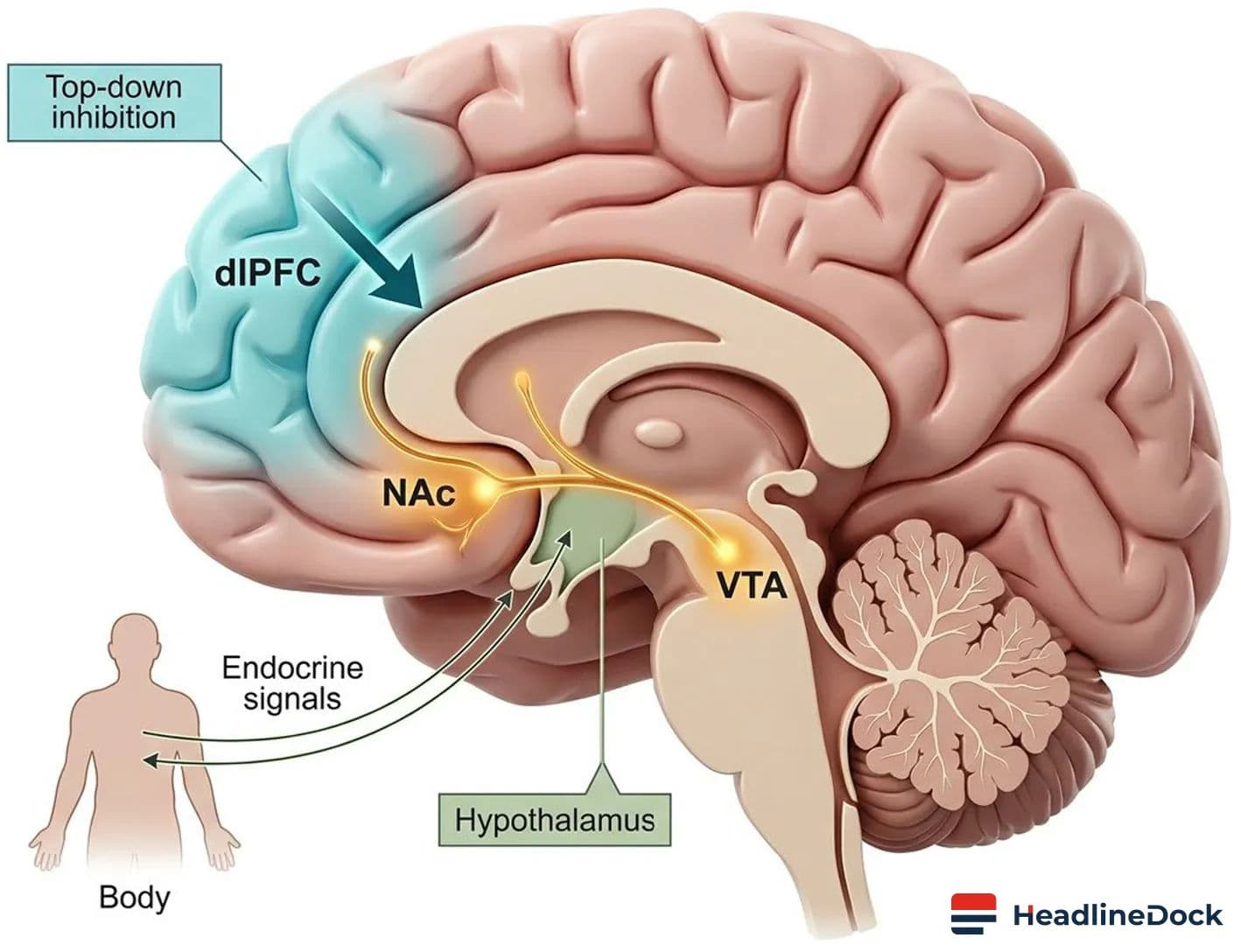
For decades, neuroscientists focused on the ventral tegmental area (VTA) and the nucleus accumbens (NAc) to understand reward-based behavior. However, because these areas lack a high density of GLP-1 receptors, experts have shifted their attention to the lateral septum. This brain structure, long associated with emotional regulation and historically linked to the concept of "septal rage" described by researchers Joseph Brady and Walle Nauta in 1953, is now viewed as a critical node in a larger connectivity network.
The lateral septum receives primary input from the hippocampus, the brain region responsible for episodic memories and spatial navigation via "place cells." Recent findings indicate that the lateral septum also houses place cells that respond specifically to rewards, essentially calculating "what is good in this place" alongside spatial and temporal data. Importantly, this region is heavily populated with GLP-1 receptors, making it a primary candidate for the anti-consumption effects observed in studies.
Recent experiments have demonstrated that activating GLP-1 receptors directly within the lateral septum can effectively curb food and alcohol intake in animal models. By potentially modulating how the lateral septum communicates with other brain systems, these medications may disrupt the neural pathways that drive intense cravings. As research continues to advance, the role of the lateral septum as a hub for craving is providing new insights into how weight-loss drugs could eventually serve as a dual-purpose solution for both obesity and various forms of addiction.