Fuel Prices Spike Pushing Inflation Higher
Fuel prices have significantly increased, contributing to higher inflation rates. Government should pursue reforms like diversification of suppliers to reduce dependency on global markets.
Highlights
- •Fuel prices increased by Rs 7.5 per litre in the last two weeks
- •Petrol is now priced at Rs 102.12 per litre in Delhi, diesel at Rs 95.20
- •Further price hikes are expected as oil marketing companies struggle
- •Uncertain US-Iran peace talks haven't resolved global crude oil supplies
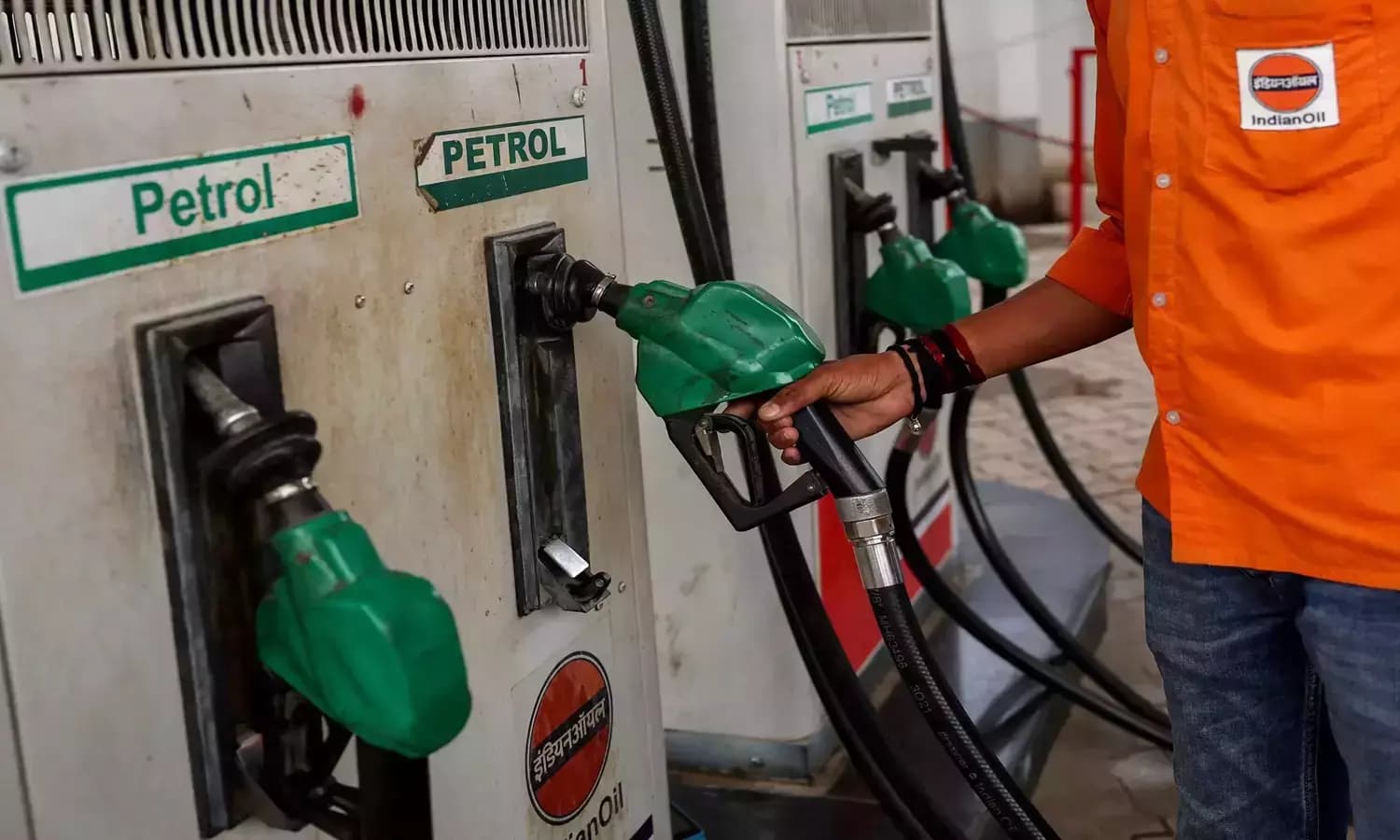
Fuel prices have surged once again, marking the fourth increase in two weeks. With each hike, petrol and diesel costs have risen by a total of Rs 7.5 per litre, contributing significantly to inflation numbers.
Now, petrol is priced at Rs 102.12 per litre in Delhi, while diesel sells for Rs 95.20 per litre. In Andhra Pradesh, the costs are even higher, with petrol priced at Rs 117.19 and diesel at Rs 104.88 per litre. The situation is particularly acute in Hyderabad, where motorists pay Rs 115.58 for petrol and Rs 103.74 for diesel.
Continuous Price Hikes Expected
Despite the steep hikes, further increases are anticipated as oil marketing companies continue to struggle, losing approximately Rs 700 crore daily due to soaring global crude oil prices. These ongoing price pressures indicate that fuel costs are likely to remain elevated for an extended period.
The situation was temporarily buoyed by hopes of a US-Iran peace deal raised by President Trump on Sunday. However, this optimism was short-lived as negotiations have not yet led to any concrete results. The prospect of stabilized crude oil prices below $100 per barrel remains elusive for now, underlining continued uncertainties in the global energy market.
The implications extend far beyond economics. With fuel being a critical commodity affecting transportation costs and manufacturing expenses, this scenario could strain the Indian economy, influencing everything from consumer goods to logistics operations. Despite these challenges, the Narendra Modi government should pursue reforms in the country's energy sector, including diversification of suppliers to mitigate disruptions.
The long-term transition to green energy is essential but the immediate focus must be on ensuring energy independence and reducing vulnerability to global supply fluctuations. This dual approach could position India more effectively against future economic shocks.