Earth’s Oldest Known Impact Crater Confirmed as 3 Billion Years Old
Geologists have confirmed that the North Pole Dome in Western Australia is the oldest known impact crater on Earth. By analyzing zircon and apatite crystals, researchers dated the ancient meteorite collision to 3.024 billion years ago, providing a rare glimpse into Earth's violent past.
Highlights
- •New research confirms the North Pole Dome as Earth's oldest recognized impact crater.
- •The impact has been dated to approximately 3.024 billion years ago using mineral clocks.
- •Shatter cones and unique crystal textures served as key evidence for the celestial collision.
- •The discovery provides vital insights into the geological conditions of the Archean era.
Researchers have confirmed that the North Pole Dome in the Pilbara region of Western Australia hosts Earth’s oldest known impact crater. New scientific analysis has solidified the age of this ancient impact crater, placing the monumental celestial collision at approximately 3.024 billion years ago. This discovery offers a rare, tangible window into the violent conditions that defined our planet's early history.
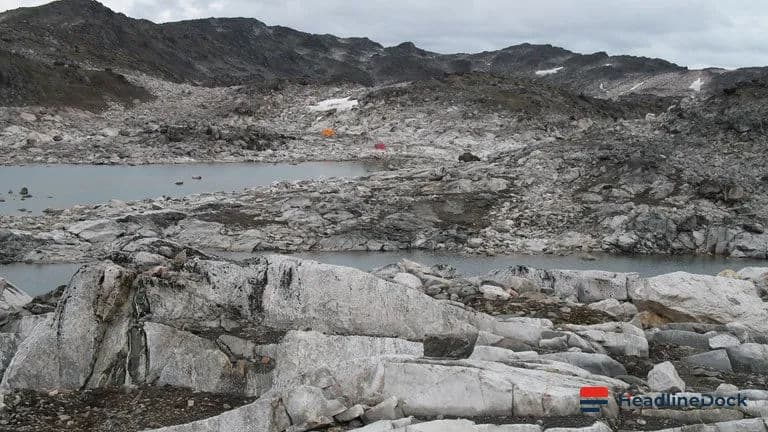
The Pilbara region is celebrated by geologists for its exceptionally preserved volcanic rocks, some dating back 3.5 billion years. These formations contain critical evidence of early geological processes and the emergence of life. Within these ancient layers, scientists discovered shatter cones—distinctive, fan-like fractures created by the intense shock waves generated during a meteorite impact.
Dating the Ancient Impact Crater
Establishing the precise age of the North Pole Dome crater had long been a point of debate due to the complex nature of the surrounding rock strata. While previous estimates based on geological correlation varied significantly, this latest study utilized advanced radiometric dating techniques on specific mineral samples. The team focused on two key minerals to act as timekeepers: zircon and apatite.
The zircon crystals recovered from the site displayed unique skeletal structures that only form under extreme, rapid thermal conditions, mirroring textures identified in lunar impact rocks. Simultaneously, the researchers examined apatite, which crystallizes during the movement of hot, mineral-rich fluids—a common byproduct of post-impact hydrothermal activity. Both mineral clocks converged on a date of 3.02 billion years ago, finally confirming the site as the only recognized impact structure from the Archean era.
This confirmation is significant because the surface of Earth is notoriously efficient at erasing its own history. Unlike the Moon, which retains a scarred record of its cosmic past, Earth constantly reshapes its surface through erosion, volcanic activity, and the relentless process of plate tectonics. Most impact structures from the planet’s youth have been obliterated or buried deep within the crust.
The survival of the North Pole Dome provides scientists with a unique opportunity to study the environmental impact of such a massive collision during the planet's infancy. By documenting these ancient geological markers, researchers are effectively assembling the missing pages of the Earth's earliest biography. This research highlights how specific mineral signatures serve as enduring, written evidence of the violent events that occurred billions of years ago, offering a clearer picture of how our world evolved during its tumultuous formative stages.