Dragonflies: Prehistoric Aerial Masters Facing Modern Environmental Threats
Dragonflies have thrived for 300 million years as highly efficient predators. However, modern human-driven threats like pollution and habitat loss are now endangering these essential bioindicators, which serve as vital guardians of our river and wetland ecosystems.
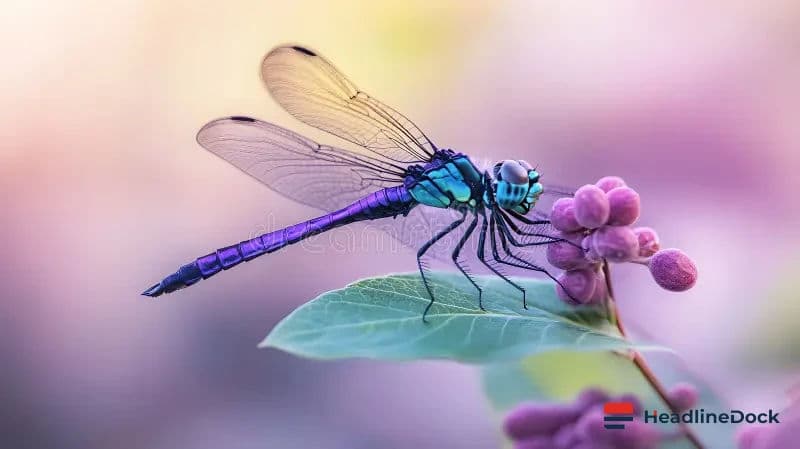
Highlights
- •Dragonflies have survived for over 300 million years, maintaining a highly successful evolutionary design.
- •They are exceptional predators with near-360-degree vision and unique flight mechanics that allow for unmatched aerial agility.
- •Acting as vital environmental bioindicators, dragonflies require clean water, making them sensitive to pollution and habitat loss.
- •Human-driven environmental damage now threatens these ancient insects, endangering the wetlands they help keep healthy.
Dragonflies, known as the living jewels of the prehistoric era, are remarkably resilient creatures that have dominated the skies for over 300 million years. Emerging long before birds or flowers, these insects were once giants of the Carboniferous period, with some species boasting wingspans exceeding 70 centimeters. Remarkably, their fundamental design has remained largely unchanged, allowing them to survive massive extinction events that wiped out countless other species.
Masters of Aerial Evolution and Hunting
As extraordinary predators, dragonflies possess sophisticated anatomical features that make them highly efficient hunters. Their enormous eyes, composed of thousands of independent omatidia, grant them a near-360-degree field of vision and the ability to detect ultraviolet light. This visual precision results in hunting success rates as high as 95 percent. Furthermore, their unique wing structure, characterized by a complex network of veins, enables them to hover, fly backward, and change direction instantly, much like biological helicopters.
The life cycle of these insects is equally fascinating. Most of their lifespan is spent as larvae submerged in freshwater habitats such as rivers and ponds. During this stage, they act as fierce predators, utilizing a specialized, retractable mask-like structure to capture prey, including tadpoles and small fish. When the time for metamorphosis arrives, the larvae emerge from the water to undergo a delicate transformation, eventually taking to the air as agile adults.
Crucial Guardians of Ecosystem Health
Beyond their beauty, dragonflies serve as vital environmental indicators. Because they require clean, oxygen-rich water to complete their development, their presence is a clear sign of a healthy aquatic ecosystem. Scientific research highlights their role in natural pest control, with populations capable of consuming vast numbers of mosquitoes and midges in a single season. Consequently, their decline in certain areas serves as a distress signal for deteriorating water quality.
Despite surviving millions of years of natural planetary changes, these ancient predators are now under significant threat due to human activity. Pollution, habitat destruction, the canalization of rivers, and the use of pesticides are rapidly reducing their numbers. Species like the Macromia splendens are currently pushed into fragmented, isolated populations, highlighting the urgency of protection.
Preserving these remarkable insects is not just about safeguarding a piece of natural history; it is essential for maintaining the health of global wetlands and river systems. Through ongoing research and public awareness, such as projects studying their adaptability to climate change, we can ensure that these silent guardians continue to thrive, bridging the gap between our prehistoric past and a sustainable future.