Do CT Scans Increase Cancer Risk? Understanding the Evidence and Benefits
Researchers are investigating the potential link between frequent CT scans and future cancer risks. While statistical models suggest a correlation due to ionizing radiation, medical experts emphasize that diagnostic benefits remain high and exposure is strictly managed via safety protocols.
Highlights
- •CT scans use ionizing radiation, which high-level organizations acknowledge as a potential risk factor for DNA damage.
- •A study in JAMA Internal Medicine suggests a statistical association between high scan volumes and future cancer cases, but lacks direct human evidence.
- •Medical professionals apply the ALARA and ALADAIP principles to ensure radiation exposure is kept to the absolute minimum required for diagnosis.
- •Diagnostic alternatives like ultrasound and MRI are frequently prioritized when they can provide sufficient clinical information without using radiation.
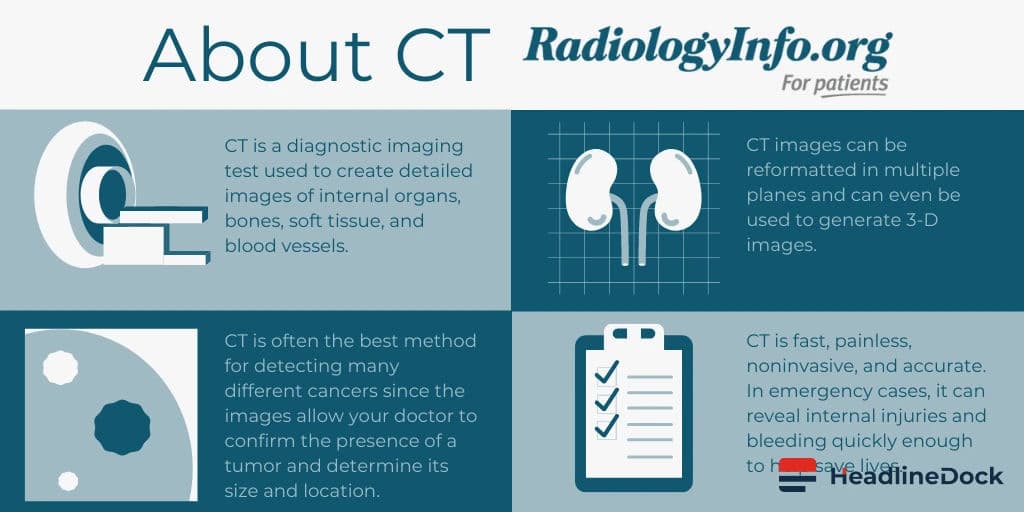
The medical community continues to evaluate whether the frequent use of a CT scan might be linked to an increased risk of developing cancer later in life. Often utilized in emergency departments to diagnose conditions such as strokes, head injuries, or unexplained abdominal pain, computed tomography (CT) scanning is a vital diagnostic tool. It uses a combination of X-ray beams and advanced computing to create detailed, three-dimensional images of internal organs, often providing critical data within minutes.
Understanding the Cancer Risk Debate
Recent discussions have resurfaced regarding the potential long-term risks associated with ionizing radiation used in these procedures. A study published in JAMA Internal Medicine estimated that the high volume of CT scans performed in the United States during 2023 could potentially be associated with over 100,000 future cancer cases. While this projection is significant, it is important to clarify that there is currently no direct evidence proving that CT scans trigger cancer in humans. Most of these projections are based on statistical models that analyze radiation exposure levels and existing epidemiological population data rather than direct clinical observations.
The radiation dosage in a CT scan typically ranges from 5 to 7 millisieverts (mSv), which is considerably higher than the 0.1 to 0.2 mSv typically delivered during a standard X-ray. While the World Health Organization (WHO) notes that high doses of ionizing radiation can cause DNA damage and elevate future health risks, medical experts remain divided on the impact of low-dose exposure. Some specialists argue that even minimal radiation could theoretically increase risk, whereas others believe the dosage levels in modern CT scans are too low to cause significant harm. Children are often considered more sensitive to radiation because their tissues are still developing, yet adults account for over 90% of all CT scan procedures.
Clinical Benefits and Patient Safety
In modern medical practice, clinicians weigh the potential risks of radiation against the immediate necessity of an accurate diagnosis. To minimize patient exposure, professionals utilize the ALARA principle—which stands for as low as reasonably achievable. This approach has evolved into ALADAIP, which emphasizes that every diagnostic test must be specifically tailored to the patient’s condition and clinical needs. Furthermore, advancements like photon-counting CT technology are allowing for sharper, more detailed images while simultaneously reducing the required radiation dose.
When necessary, doctors may also opt for non-radiation alternatives, such as ultrasonography (USG), which uses high-frequency sound waves, or magnetic resonance imaging (MRI), which relies on magnetic fields and radio waves. Ultimately, while vigilance regarding radiation exposure is essential, the diagnostic accuracy provided by CT scans remains a cornerstone of life-saving medicine. When used appropriately, the immediate clinical benefits of identifying and treating serious diseases almost always outweigh the potential long-term risks.