Direct Wave from Colliding Black Holes Reveals Signature of Spacetime Whirlpool
Scientists have identified a unique direct wave from the black hole merger GW250114. This breakthrough confirms that rotating black holes create a whirlpool effect in spacetime known as frame dragging, providing new insights into the nature of event horizons.
Highlights
- •Researchers detected a direct wave from a black hole merger, revealing spacetime frame dragging.
- •The signal originated from the record-breaking collision event known as GW250114.
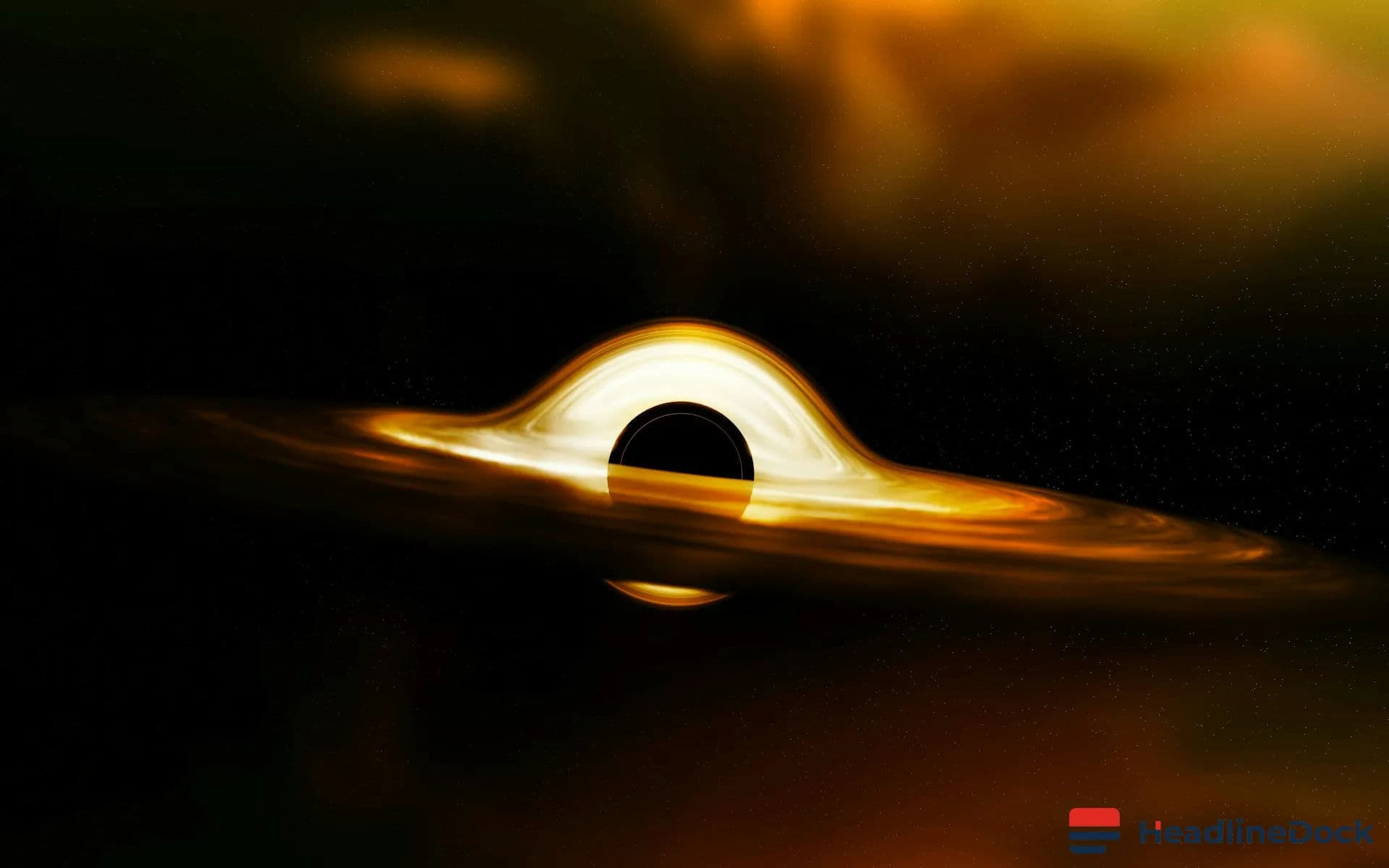
- •Frame dragging causes space itself to swirl near the rotation of a black hole.
- •This discovery allows for new tests of general relativity at the event horizon boundary.
Recent scientific breakthroughs have provided researchers with an unprecedented look at the complex environment surrounding black holes. By analyzing a distinct signal known as a direct wave from a massive collision, scientists have successfully identified the signature of a literal whirlpool in the fabric of space and time.
When two black holes are situated in close proximity, they inevitably spiral toward one another. This cosmic dance culminates in a cataclysmic merger, forming a single, more massive entity. Throughout this dramatic event, the merging bodies emit gravitational waves—ripples that distort the very geometry of the universe. While these waves are incredibly faint by the time they reach Earth, sensitive equipment like the Laser Interferometer Gravitational Wave Observatory (LIGO) allows experts to record them.
Decoding the Direct Wave Phenomenon
The most significant merger recorded to date, identified as GW250114, has offered scientists an exceptionally clear window into the behavior of the newly formed object. Using data from GW250114, researchers have successfully isolated the elusive direct wave. This specific component of the gravitational signal carries vital information from the region immediately bordering the event horizon.
According to Albert Einstein’s theory of general relativity, rotating black holes do not exist in isolation; they actively influence the space around them. This creates a phenomenon known as frame dragging. Near the event horizon, space itself is pulled along by the intense rotation of the black hole. It functions similarly to a powerful whirlpool, where objects are forced to conform to the motion of the surrounding environment, in this case, the swirling fabric of spacetime.
The successful detection of the direct wave confirms long-standing theoretical predictions. By isolating this signal, researchers can now more accurately calculate the rotational velocity and the intensity of gravitational forces at the edge of the event horizon. This breakthrough provides a new method for testing the accuracy of general relativity in extreme conditions.
Advancing Our Understanding of the Universe
Accessing data from the immediate vicinity of an event horizon has historically been difficult, as light cannot escape these regions. However, the study of gravitational waves now provides a unique pathway to investigate these boundaries. As researchers continue to refine these techniques, the findings may reveal discrepancies between general relativity and quantum mechanics. Because black holes represent an environment where gravity and quantum phenomena intersect, they serve as the perfect laboratories to explore potential gaps in our fundamental understanding of physics and the ultimate nature of the universe.