Can Nanobubble Technology Clear the Lincoln Memorial Reflecting Pool in Time?
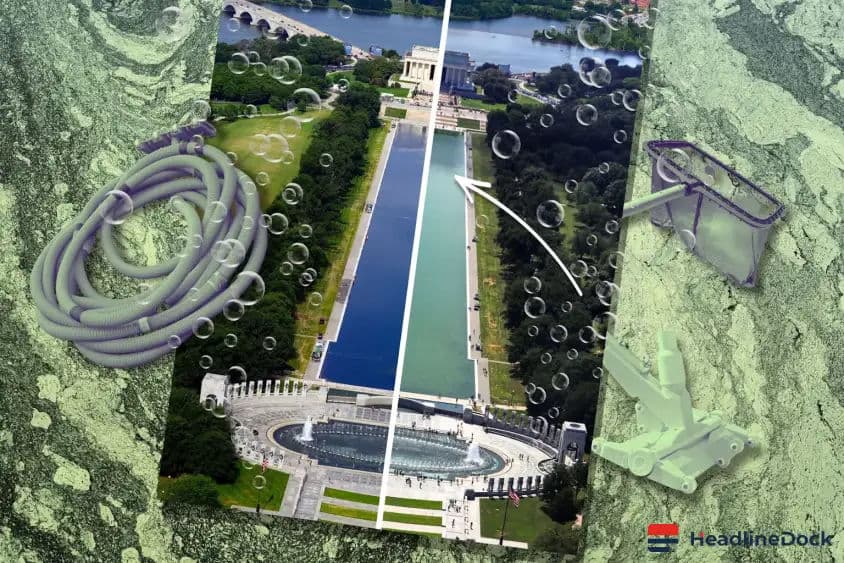
Following an unexpected algal bloom, officials in Washington, DC are utilizing nanobubble technology to clean the Lincoln Memorial Reflecting Pool. This advanced water treatment method, while effective at rapid cleaning, poses questions regarding long-term ecosystem health as further maintenance is scheduled.
Highlights
- •Nanobubbles are microscopic gas-filled structures about 100 nanometres wide used in water treatment.
- •The technology is surprisingly stable, with bubbles remaining suspended in water for extended periods.
- •Ozone nanobubbles effectively kill algae but can also remove beneficial bacteria needed for ecosystem health.
- •The Lincoln Memorial Reflecting Pool requires further drainage to address recurring algae and structural coating issues.
As the United States prepares for its 250th birthday celebrations on July 4, historic landmarks in Washington, DC are undergoing maintenance to look their best. However, recent efforts to renovate the iconic Lincoln Memorial Reflecting Pool have encountered unexpected challenges. Shortly after completion, the water developed a persistent, slimy green algal bloom, prompting officials to urgently deploy nanobubble technology as a corrective measure.
Understanding Nanobubble Technology
Nanobubbles, frequently referred to as ultrafine bubbles, are microscopic gas-filled structures with diameters typically around 100 nanometres. To put this size into perspective, each individual bubble is roughly one thousandth the thickness of a human hair. When specialized equipment is utilized to inject gases—such as air, oxygen, or ozone—into a liquid, these bubbles are generated in vast quantities, often reaching billions per teaspoon. Despite their high concentration, a liquid containing nanobubbles appears and behaves just like ordinary water to the naked eye.
A fascinating aspect of nanobubble technology is its remarkable stability. Physics dictates that the pressure within a bubble should cause it to collapse rapidly; however, research demonstrates that these tiny structures can persist for hours, days, or even weeks. Their small size results in minimal buoyancy, allowing them to remain suspended in liquid rather than rising quickly to the surface to burst, as larger bubbles do. This longevity, combined with their massive total surface area, makes them highly effective tools for various industrial and environmental applications, including advanced water purification.
Addressing Algal Blooms
The green algae affecting the Lincoln Memorial Reflecting Pool thrives in slow-moving or stagnant water exposed to ample sunlight. In professional water treatment settings, nanobubbles serve two primary functions. Oxygen-based nanobubbles promote the proliferation of beneficial aerobic bacteria, which consume organic nutrients and naturally outcompete the algae. Alternatively, ozone-infused nanobubbles act as a potent oxidizing agent that chemically breaks down and eliminates both algae and organic contaminants.
While the ozone treatment is highly effective at quickly resolving visible blooms, it is a aggressive method that also destroys the beneficial bacteria required for a long-term, self-sustaining healthy ecosystem. Because the pool has faced ongoing issues, including a rapidly peeling new coating, it is scheduled to be drained once more. The current situation highlights the ongoing struggle to balance rapid remediation with long-term ecological health, leaving experts and the public waiting to see if the water will be clear in time for the upcoming Independence Day festivities.