BluJ Aerospace's Gen #2 Aircraft Dials Up Vertical Flight Test
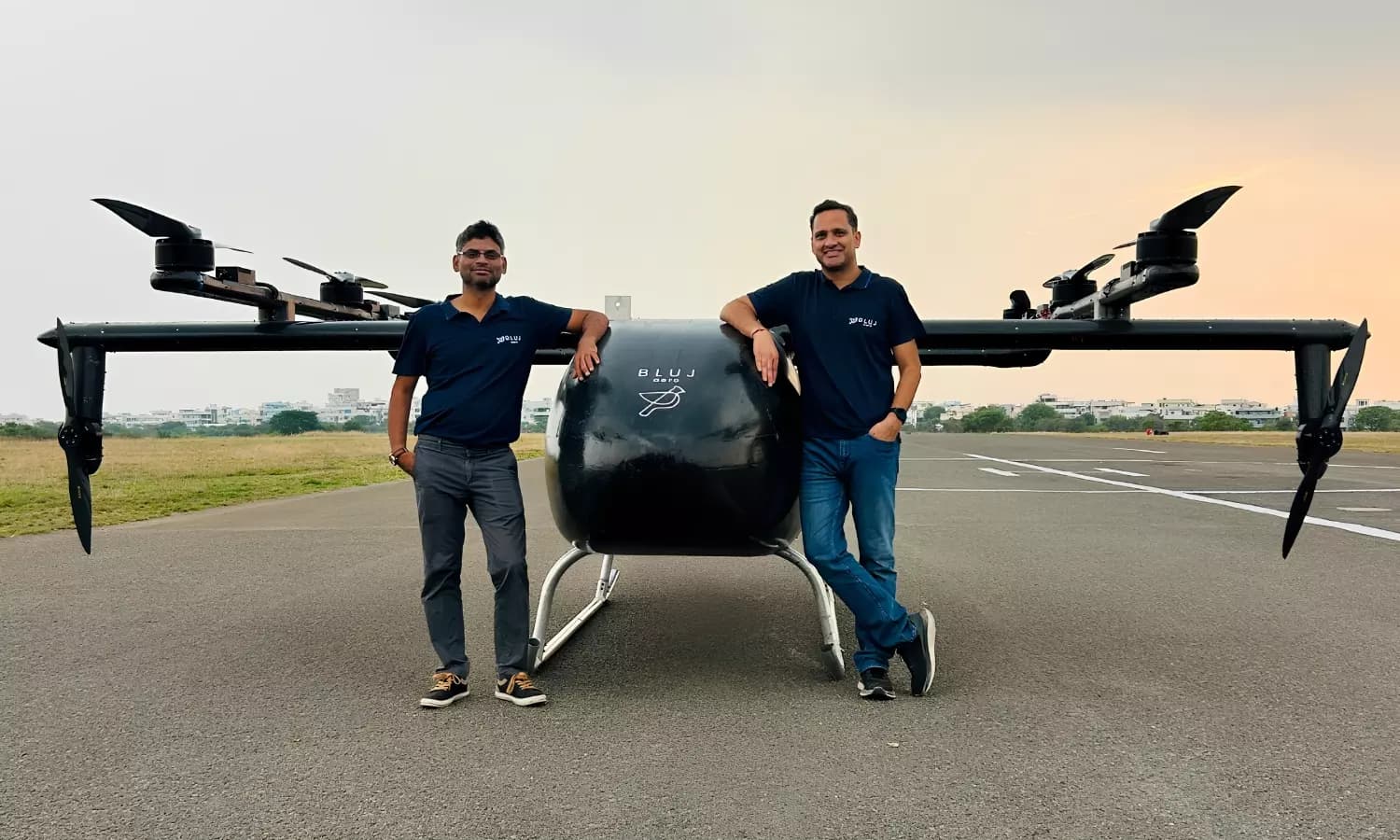
BluJ Aerospace's Gen #2 aircraft is undergoing rigorous testing within the VANTIS platform, advancing India's position in electric vertical take-off and landing (eVTOL) technology. With a focus on commercial-grade logistics, this development highlights the company's commitment to innovation and multi-sector collaboration.
Highlights
- •BluJ Aerospace unveils Gen #2 aircraft as part of VANTIS platform
- •Aiming for heavy payload capacity with a 500 kg maximum take-off weight
- •Collaboration with key industry partners on hydrogen-electric propulsion systems
- •Rapid development enabled by the multi-product platforms like VANTIS
Hyderabad, India — BluJ Aerospace, a deep-tech aerospace company based in Hyderabad, has unveiled its Gen #2 aircraft as part of the VANTIS platform architecture. This marks a significant milestone four years after initiating in-house R&D and following the successful completion of Gen #1's first public flight demonstration.
Logistics at Heart, Vertical Take-Off and Landing Innovation
Designed for commercial-grade logistics with heavy payload capacity, Gen #2 aims to deliver a payload target of over 200 kg, operates under a maximum take-off weight of 500 kg, and utilizes a lift-plus-cruise configuration. The fully battery-powered aircraft is being utilized not only for testing but also in evaluating logistics mission operations.
BluJ Aerospace's VANTIS platform integrates airframe with propulsion, controls, and autonomy systems to facilitate the rapid development of multiple variants. Amar Sri Vatsavaya, founder and CEO of BluJ Aerospace, remarks, "The shift towards multi-product platforms, like VANTIS, is set to revolutionize vertical flight technology."
In addition to its logistics division, the company's commercial pipeline extends into energy, airports, and defense sectors. Collaboration with Bharat Petroleum Corporation Limited and Cochin International Airport Limited focuses on developing hydrogen-electric propulsion systems for long-range passenger variants slated for 2027-28.
The facility in Hyderabad spans 40,000 square feet and is home to over 50 engineers and aerospace specialists. These professionals are driving innovation as India aims to establish itself at the forefront of vertical aviation technology.