BJP Supports NCERT Decision to Include 1975 Emergency Chapter in Class 9 Textbooks
The BJP has backed the NCERT's decision to include a chapter on the 1975 Emergency in new Class 9 social science textbooks. The party asserts that educating students about this period is vital to protecting constitutional democracy and preventing past mistakes.
Highlights
- •The BJP has supported the inclusion of the 1975 Emergency in Class 9 NCERT textbooks.
- •The textbook \"Understanding Society: India and Beyond\" describes the Emergency as a major challenge to democracy.
- •BJP spokesperson Shehzad Poonawalla emphasized that the era must be taught to prevent it from happening again.
- •The curriculum covers the suppression of fundamental rights and constitutional institutions during the 1975-1977 period.
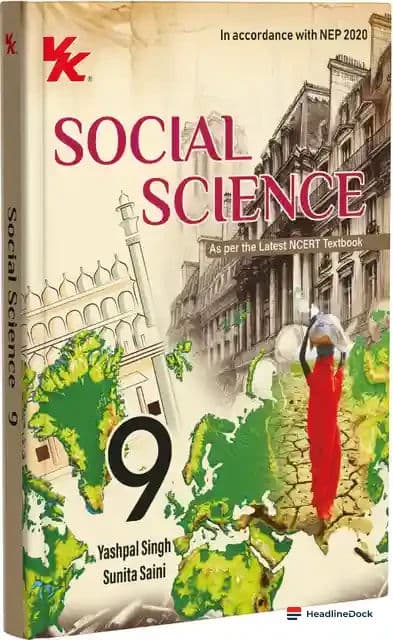
The Bharatiya Janata Party (BJP) has officially endorsed the recent initiative by the National Council of Educational Research and Training (NCERT) to integrate a comprehensive section on the 1975 Emergency into the new Class 9 social science curriculum. The textbook, titled \"Understanding Society: India and Beyond,\" now features specific details regarding this era, framing it as a major challenge to India's democratic foundations.
According to BJP spokesperson Shehzad Poonawalla, this inclusion is a crucial step in ensuring that younger generations remain aware of what he described as the \"darkest chapter\" in the constitutional history of the nation. The government stance emphasizes that educating students about the historical period between June 25, 1975, and March 21, 1977, is essential to prevent the recurrence of such events in the future.
Understanding the Emergency in Educational Curricula
The Emergency period, declared by the administration of former Prime Minister Indira Gandhi, saw the widespread suspension of fundamental rights, restrictions on judicial reviews, and significant pressure on various constitutional institutions. The new educational material highlights these developments, illustrating how the legislature, judiciary, and media were severely constrained during the two-year span.
Shehzad Poonawalla argued that the Congress party, which governed during that time, maintains an \"Emergency mindset\" by resisting these educational reforms. The BJP asserts that historical transparency is necessary for the health of the democracy. They noted that figures such as Jayaprakash Narayan, Mulayam Singh Yadav, and Lalu Prasad Yadav stood in opposition to those events, and it remains a point of contention that many contemporary political entities have since aligned themselves with the Congress.
By including this chapter in the NCERT textbook, the curriculum aims to facilitate a deeper understanding of how constitutional safeguards were dismantled. The ruling party remains firm that learning from these past mistakes is a non-negotiable aspect of civic education. As the debate continues, the focus remains on the importance of maintaining democratic norms and ensuring that institutional integrity is preserved through informed public awareness.