BJP Questions Sheikh Abdullah’s Role in Dr. Syama Prasad Mookerjee’s 1953 Death
The BJP has formally questioned the circumstances surrounding the 1953 death of Dr. Syama Prasad Mookerjee in Kashmir, calling for accountability regarding his detention by the then administration led by Sheikh Abdullah. The party maintains that his struggle remains central to India's national integration.
Highlights
- •BJP leadership questions the circumstances surrounding Dr. Syama Prasad Mookerjee's 1953 death.
- •Dr. Mookerjee was detained for entering Jammu and Kashmir without a mandatory permit at the time.
- •The party highlighted Mookerjee's struggle against the region's separate constitution, flag, and political system.
- •BJP officials reiterated that the abrogation of Article 370 fulfilled Mookerjee's vision of national unity.
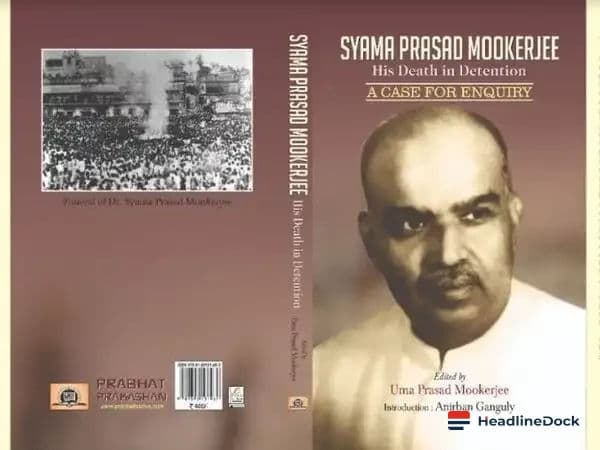
The Bharatiya Janata Party (BJP) has reignited discourse surrounding the 1953 demise of Dr. Syama Prasad Mookerjee, the founder of the Bharatiya Jana Sangh, while visiting Jammu and Kashmir. Senior party leadership is now formally questioning the political and moral accountability of the administration then led by Sheikh Muhammad Abdullah, which had detained Dr. Mookerjee for entering the region without a permit.
Dr. Syama Prasad Mookerjee's death remains a significant point of contention in Indian political history. During a recent event, Tarun Chugh, the BJP National General Secretary and the party's in-charge for the region, characterized Dr. Mookerjee as a prominent nationalist who sacrificed his life to ensure the complete integration of the erstwhile state into India.
Examining the Legacy of Dr. Syama Prasad Mookerjee
Dr. Mookerjee famously advocated for the principles of “Ek Vidhan, Ek Nishan, Ek Pradhan,” standing firmly against the implementation of a separate constitution, flag, and political structure for Jammu and Kashmir. In May 1953, he traveled from Delhi to Jammu to back the Praja Parishad movement, which opposed the existing permit system. By entering the state without a permit, he sought to challenge the notion that an Indian citizen required special authorization to traverse any part of their own country.
Following his arrest on May 11, 1953, at Lakhanpur, Dr. Mookerjee was relocated to Srinagar. He was held in a makeshift sub-jail within a cottage near the historical Nishat Bagh. Historical accounts frequently describe this site as isolated, suffering from poor communication infrastructure and inadequate medical facilities. He ultimately passed away in detention on June 23, 1953.
Political Questions and Historical Context
The BJP leadership has highlighted that the absence of a transparent and independent inquiry into the circumstances of this death continues to leave many questions unanswered, particularly regarding the quality of medical care provided during his confinement. Tarun Chugh alleged that the policies championed by Sheikh Abdullah during that era fostered separatist sentiments and distanced Jammu and Kashmir from the national mainstream.
In his autobiography, Aatish-e-Chinar, Sheikh Abdullah presented a defensive perspective, asserting that the authorities did their utmost to provide medical care to Dr. Mookerjee. He further noted that Prime Minister Jawaharlal Nehru and Maulana Abul Kalam Azad visited the region during that period but did not hold a meeting with the detainee. The current political debate underscores the enduring impact of this historical episode on the constitutional and emotional relationship between the region and the rest of the country.
,curated_key_highlights:[