16th Century Rock Inscription of Sadasivadevaraya Found in Seshachalam Reserve Forest
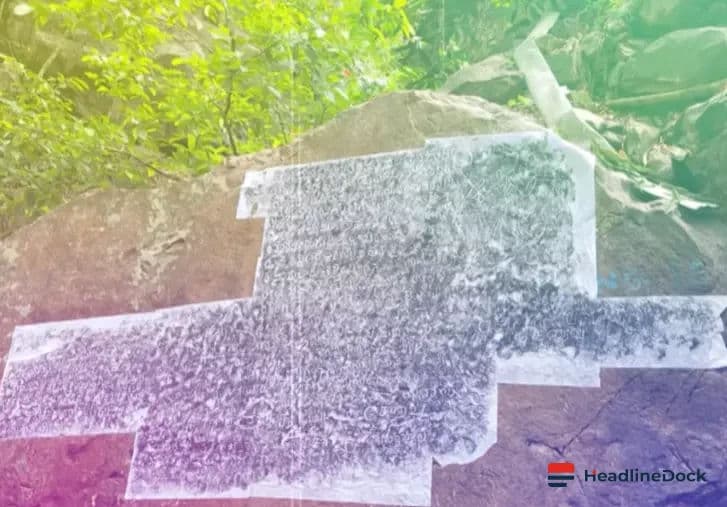
The Archaeological Survey of India has discovered a 16th-century trilingual inscription in Andhra Pradesh's Seshachalam Reserve Forest. It details King Sadasivadevaraya's patronage of a Siva temple, providing valuable information on the administrative and religious practices of the Vijayanagara Empire in the region.
Highlights
- •ASI archaeologists discovered a 16th-century inscription of Vijayanagara ruler Sadasivadevaraya in Seshachalam Reserve Forest.
- •The inscription is written in Telugu, Kannada, and Tamil, highlighting the linguistic diversity of the era.
- •It records the king’s visit to Sadasivakona for a holy bath and the founding of a new Siva temple.
- •Tax revenues from Gudimallam’s Parasuramesvara Temple were allocated to sustain the new site’s religious activities.
The Archaeological Survey of India (ASI) has announced a significant historical discovery following an exploratory mission within the Seshachalam Reserve Forest in Andhra Pradesh. Researchers have successfully documented a 16th-century rock inscription attributed to the influential Vijayanagara ruler, Sadasivadevaraya. This finding sheds light on the complex administrative and religious landscape of the medieval period in southern India.
The newly identified 16th-century rock inscription is linguistically diverse, featuring text in Telugu, Kannada, and Tamil scripts and languages. This trilingual nature serves as a testament to the cultural integration and the linguistic fluidity that characterized the Vijayanagara Empire during its zenith. The inscription was discovered during a meticulous geographical and archaeological assessment conducted by field teams operating within the dense forest region.
Historical Significance of the Sadasivadevaraya Inscription
According to the ASI, the text provides a detailed account of the events surrounding the royal visit of Sadasivadevaraya to the site. The monarch reportedly visited the region to perform a sacred bath at Papavinasa, situated in Sadasivakona. During this visit, the king commissioned the construction of both a monastery and a dedicated Siva temple, marking the area as a site of significant spiritual importance during the 16th century.
The administrative details inscribed on the rock highlight the economic structure supporting these religious institutions. The record explicitly mentions that the king allocated tax revenues derived from the temple lands associated with the Parasuramesvara Temple located in Gudimallam to ensure the sustained maintenance of the new temple at Sadasivakona. These financial resources were placed under the stewardship of Sadasivabasavanna Odeya, a notable functionary and disciple of Linganna Odeya of Bendekari. These funds were designated to support daily rituals, including essential food offerings and other sacred religious services.
The discovery of this 16th-century rock inscription offers historians and archaeologists a rare opportunity to re-examine the reach of Vijayanagara patronage. By linking specific temple land revenues to remote religious sites, the inscription reveals a sophisticated system of resource management and regional governance. As experts continue to study the artifact, it is expected to provide deeper insights into how the empire balanced administrative logistics with the promotion of religious activities in the forest belts of Andhra Pradesh. This find remains a landmark contribution to understanding the legacy of Sadasivadevaraya and the endurance of his administrative policies.